Dutch cabinet collapses in dispute over Afghanistan

H/T Fred at GAR with thanks

From the BBC:

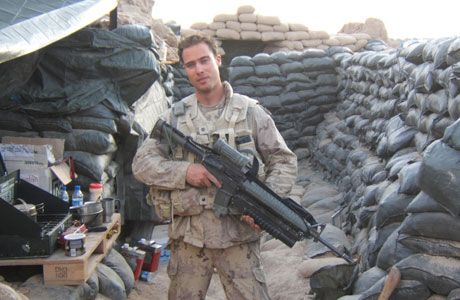
A Dutch soldier in Afghanistan
Dutch forces have been in Uruzgan since 2006

The Dutch government has collapsed over disagreements within the governing coalition on extending troop deployments in Afghanistan.

After marathon talks, Christian Democratic Prime Minister Jan Peter Balkenende announced that the Labour Party was quitting the government.

Mr Balkenende has been considering a Nato request for Dutch forces to stay in Afghanistan beyond 2010.

But Labour, the second-largest coalition party, has opposed the move.

Just under 2,000 Dutch service personnel have been serving in the southern Afghan province of Uruzgan since 2006, with 21 killed.

Their deployment has already been extended once.

Where there is no trust, it is difficult to work together

Jan Peter Balkenende
The troops should have returned home in 2008, but they stayed on because no other Nato nation offered replacements.

The commitment is now due to end in August 2010.

The Dutch parliament voted in October 2009 that it must definitely stop by then, although the government has yet to endorse that vote.

The finance minister and leader of the Labour Party, Wouter Bos, demanded an immediate ruling from Mr Balkenende.

Nato priority

The collapse of the government was announced after a 16-hour cabinet meeting.

Dutch Prime Minister Jan Peter Balkenende
Mr Balkenende had been considering the Nato request
The prime minister said there was no common ground between the parties.

“Where there is no trust, it is difficult to work together. There is no good path to allow this cabinet to go further,” he said.

The launch in 2001 of Nato’s International Security Assistance Force (Isaf) for Afghanistan was the organisation’s first and largest ground operation outside Europe.

Secretary-General Anders Fogh Rasmussen said six months ago when he began his job that his priority was the war in Afghanistan.

As of June 2009, Isaf had more than 61,000 personnel from 42 different countries including the US, Canada, European countries, Australia, Jordan and New Zealand.

The US provides the bulk of foreign forces in Afghanistan, and President Barack Obama has announced an extra 30,000 American troops for Afghanistan.

The Pentagon has said the next 18 months could prove crucial for the international mission in Afghanistan, after more than eight years of efforts to stabilise the country.

Afghanistan remains a deadly place for foreign forces.

Suicide attacks on Afghan civilians and roadside bomb strikes on international troops are common, with the Taliban strongly resurgent in many areas of the country.

Stratfor: The Khost Attack and the Intelligence War Challenge

By George Friedman and Scott Stewart of STRATFOR:

As Khalil Abu-Mulal al-Balawi exited the vehicle that brought him onto Forward Operating Base (FOB) Chapman in Khost, Afghanistan, on Dec. 30, 2009, security guards noticed he was behaving strangely. They moved toward al-Balawi and screamed demands that he take his hand out of his pocket, but instead of complying with the officers’ commands, al-Balawi detonated the suicide device he was wearing.

The explosion killed al-Balawi, three security contractors, four CIA officers and the Jordanian General Intelligence Department (GID) officer who was al-Balawi’s handler. The vehicle shielded several other CIA officers at the scene from the blast. The CIA officers killed included the chief of the base at Khost and an analyst from headquarters who reportedly was the agency’s foremost expert on al Qaeda. The agency’s second-ranking officer in Afghanistan was allegedly among the officers who survived.
Al-Balawi was a Jordanian doctor from Zarqa (the hometown of deceased al Qaeda in Iraq leader Abu Musab al-Zarqawi). Under the alias Abu Dujanah al-Khurasani, he served as an administrator for Al-Hesbah, a popular Internet discussion forum for jihadists. Jordanian officers arrested him in 2007 because of his involvement with radical online forums, which is illegal in Jordan. The GID subsequently approached al-Balawi while he was in a Jordanian prison and recruited him to work as an intelligence asset.
Al-Balawi was sent to Pakistan less than a year ago as part of a joint GID/CIA mission. Under the cover of going to school to receive advanced medical training, al-Balawi established himself in Pakistan and began to reach out to jihadists in the region. Under his al-Khurasani pseudonym, al-Balawai announced in September 2009 in an interview on a jihadist Internet forum that he had officially joined the Afghan Taliban.

A Lucky Break for the TTP

It is unclear if al-Balawi was ever truly repentant. Perhaps he cooperated with the GID at first, but had a change of heart sometime after arriving in Pakistan. Either way, at some point al-Balawi approached the Tehrik-i-Taliban Pakistan (TTP), the main Pakistani Taliban group, and offered to work with it against the CIA and GID. Al-Balawi confirmed this in a video statement recorded with TTP leader Hakeemullah Mehsud and released Jan. 9. This is significant because it means that al-Balawi’s appearance was a lucky break for the TTP, and not part of some larger, intentional intelligence operation orchestrated by the TTP or another jihadist entity like al Qaeda.
The TTP’s luck held when a group of 13 people gathered to meet al-Balawi upon his arrival at FOB Chapman. This allowed him to detonate his suicide device amid the crowd and create maximum carnage before he was able to be searched for weapons.
In the world of espionage, source meetings are almost always a dangerous activity for both the intelligence officer and the source. There are fears the source could be surveilled and followed to the meeting site, or that the meeting could be raided by host country authorities and the parties arrested. In the case of a terrorist source, the meeting site could be attacked and those involved in the meeting killed. Because of this, the CIA and other intelligence agencies exercise great care while conducting source meetings. Normally they will not bring the source into a CIA station or base. Instead, they will conduct the meeting at a secure, low-profile offsite location
.
Operating in the wilds of Afghanistan is far different from operating out of an embassy in Vienna or Moscow, however. Khost province is Taliban territory, and it offers no refuge from the watching eyes and gunmen of the Taliban and their jihadist allies. Indeed, the province has few places safe enough even for a CIA base. And this is why the CIA base in Khost is located on a military base, FOB Chapman, named for the first American killed in Afghanistan following the U.S. invasion. Normally, an outer ring of Afghan security around the base searches persons entering FOB Chapman, who the U.S. military then searches again at the outer perimeter of the U.S. portion of the base. Al-Balawi, a high-value CIA asset, was allowed to skip these external layers of security to avoid exposing his identity to Afghan troops and U.S. military personnel. Instead, the team of Xe (the company formerly known as Blackwater) security contractors were to search al-Balawi as he arrived at the CIA’s facility.
A Failure to Follow Security Procedures

Had proper security procedures been followed, the attack should only have killed the security contractors, the vehicle driver and perhaps the Jordanian GID officer. But proper security measures were not followed, and several CIA officers rushed out to greet the unscreened Jordanian source. Reports indicate that the source had alerted his Jordanian handler that he had intelligence pertaining to the location of al Qaeda second-in-command Ayman al-Zawahiri. (There are also reports that al-Balawi had given his handlers highly accurate battle damage assessments on drone strikes in Pakistan, indicating that he had access to high-level jihadist sources.) The prospect of finally receiving such crucial and long-sought information likely explains the presence of the high-profile visitors from CIA headquarters in Langley and the station in Kabul — and their exuberance over receiving such coveted intelligence probably explains their eager rush to meet the source before he had been properly screened.
The attack, the most deadly against CIA personnel since the 1983 Beirut bombing, was clearly avoidable, or at least mitigable. But human intelligence is a risky business, and collecting human intelligence against jihadist groups can be flat-out deadly. The CIA officers in Khost the day of the bombing had grown complacent, and violated a number of security procedures. The attack thus serves as a stark reminder to the rest of the clandestine service of the dangers they face and of the need to adhere to time-tested security procedures.
A better process might have prevented some of the deaths, but it would not have solved the fundamental problem: The CIA had an asset who turned out to be a double agent. When he turned is less important than that he was turned into — assuming he had not always been — a double agent. His mission was to gain the confidence of the CIA as to his bona fides, and then create an event in which large numbers of CIA agents were present, especially the top al Qaeda analyst at the CIA. He knew that high-value targets would be present because he had set the stage for the meeting by dangling vital information before the agency. He went to the meeting to carry out his true mission, which was to deliver a blow against the CIA. He succeeded.
The Obama Strategy’s Weakness

In discussing the core weakness in the Afghan strategy U.S. President Barack Obama has chosen, we identified the basic problem as the intelligence war. We argued that establishing an effective Afghan army would be extremely difficult, if not impossible, because the Americans and their NATO allies lacked knowledge and sophistication in distinguishing friend from foe among those being recruited into the army. This problem is compounded by the fact that there are very few written documents in a country like Afghanistan that could corroborate identities. The Taliban would seed the Afghan army with its own operatives and supporters, potentially exposing the army’s operations to al Qaeda.
This case takes the problem a step further. The United States relied on Jordanian intelligence to turn a jihadist operative into a double agent. They were dependent on the Jordanian handler’s skills at debriefing, vetting and testing the now-double agent. It is now reasonable to assume the agent allowed himself to be doubled in an attempt to gain the trust of the handler. The Jordanians offered the source to the Americans, who obviously grabbed him, and the source passed all the tests to which he was undoubtedly subjected. Yet in the end, his contacts with the Taliban were not designed to provide intelligence to the Americans. The intelligence provided to the Americans was designed to win their trust and set up the suicide bombing. It is therefore difficult to avoid the conclusion that al-Balawi was playing the GID all along and that his willingness to reject his jihadist beliefs was simply an opportunistic strategy for surviving and striking.
Even though encountering al-Balawi was a stroke of luck for the TTP, the group’s exploitation of this lucky break was a very sophisticated operation. The TTP had to provide valuable intelligence to allow al-Balawi to build his credibility. It had to create the clustering of CIA agents by promising extraordinarily valuable intelligence. It then had to provide al-Balawi with an effective suicide device needed for the strike. And it had to do this without being detected by the CIA. Al-Balawi had a credible cover for meeting TTP agents; that was his job. But what al-Balawi told his handlers about his meetings with the TTP, and where he went between meetings, clearly did not indicate to the handlers that he was providing fabricated information or posed a threat.
In handling a double agent, it is necessary to track every step he takes. He cannot be trusted because of his history; the suspicion that he is still loyal to his original cause must always be assumed. Therefore, the most valuable moments in evaluating a double agent are provided by intense scrutiny of his patterns and conduct away from his handlers and new friends. Obviously, if this scrutiny was applied, al-Balawi and his TTP handlers were still able to confuse their observers. If it was not applied, then the CIA was setting itself up for disappointment. Again, such scrutiny is far more difficult to conduct in the Pakistani badlands, where resources to surveil a source are very scarce. In such a case, the intuition and judgment of the agent’s handler are critical, and al-Balawi was obviously able to fool his Jordanian handler.
Given his enthusiastic welcome at FOB Chapman, it would seem al-Balawi was regarded not only as extremely valuable but also as extremely reliable. Whatever process might have been used at the meeting, the central problem was that he was regarded as a highly trusted source when he shouldn’t have been. Whether this happened because the CIA relied entirely on the Jordanian GID for evaluation or because American interrogators and counterintelligence specialists did not have the skills needed to pick up the cues can’t be known. What is known is that the TTP ran circles around the CIA in converting al-Balawi to its uses.
The United States cannot hope to reach any satisfactory solution in Afghanistan unless it can win the intelligence war. But the damage done to the CIA in this attack cannot be underestimated. At least one of the agency’s top analysts on al Qaeda was killed. In an intelligence war, this is the equivalent of sinking an aircraft carrier in a naval war. The United States can’t afford this kind of loss. There will now be endless reviews, shifts in personnel and re-evaluations. In the meantime, the Taliban in both Pakistan and Afghanistan will be attempting to exploit the opportunity presented by this disruption.
Casualties happen in war, and casualties are not an argument against war. However, when the center of gravity in a war is intelligence, and an episode like this occurs, the ability to prevail becomes a serious question. We have argued that in any insurgency, the insurgents have a built-in advantage. It is their country and their culture, and they are indistinguishable from everyone else. Keeping them from infiltrating is difficult.
This was a different matter. Al-Balawi was Jordanian; his penetration of the CIA was less like the product of an insurgency than an operation carried out by a national intelligence service. And this is the most troubling aspect of this incident for the United States. The operation was by all accounts a masterful piece of tradecraft beyond the known abilities of a group like the TTP. Even though al-Balawi’s appearance was a lucky break for the TTP, not the result of an intentional, long-term operation, the execution of the operation that arose as a result of that lucky break was skillfully done — and it was good enough to deliver a body blow to the CIA. The Pakistani Taliban would thus appear far more skilled than we would have thought, which is the most important takeaway from this incident, and something to ponder

Terry Glavin: Afghanistan: A Quagmire Of Confidence, Progress And Optimism.

From Terry Glavin’s blog. A word of advice to any0ne interested in the issue of Afghanistan and the NATO mission there. Do not solidify an opinion until you have read Terry Glavin on the subject. I include myself in this admonishon as I myself have changed my views a fair amount after reading Terry.
Eeyore for Vlad:
This latest poll is the now the 14th survey of which I am aware that wholly defies the received wisdom (which is to say the fashionable delusions and popular frenzies) abroad in the rich countries of the world about Afghanistan, and about “what Afghans think.” I am aware of no poll – not one – that supports the self-obsessed and fraudulent “anti-war” opinion in Canada on these subjects, or that does not expose bourgeois “left-wing” opinion to be objectively far-right, reactionary, and in opposition to the hopes and aspirations of the Afghan people.

‘Troops Out Now!’

Sixty-one per cent of the Afghan respondents support the U.S./NATO “surge” of 37,000 troops. Only 25 per cent agree with the American (and Canadian) plan to start withdrawing troops in 18 months, and while 22 per cent say foreign troops should start to pull out sooner, 21 per cent say foreign troops should in fact stay longer, and 29 per cent (the most sensible cohort, in my view) say troop withdrawals should depend on the security situation at the time. More than 70 per cent of Afghans rate the performance of American and other NATO/ISAF troops as excellent, good or fair.

‘Why Do They Hate Us?’

They don’t, so all those drippy Californian society ladies who hold such sway over “progressive” opinion in Canada should avail themselves of their hankies and smelling salts and shut their gobs. Continue Reading →

Terry Glavin on CFRA Dec 22 2009

It is difficult to get people to listen to radio in a video age. And I have posted another Terry Glavin interview in the last 30 days from CBC. However this one is different and I ask Vlad’s readers to please settle back with a drink and put this most excellent, scholarly, informed and hard hitting interview about Afghanistan and Canada’s role there.

Whether you agree with the mission or not, no matter what your position this is a highly informative and important interview. Nick Vandergragt told me he felt this was the best interview he ever did.

I believe him. Terry one could argue, is Canada’s answer to Christopher Hitchens. This is a fair comparison on many levels. Both men are brilliant, have profound convictions and I might add, the courage that those convictions bring.

Terry also, being a leftist himself, knew exactly how to speak to what one might call, the new left, and how it abuses terms like The Peace Movement and so on. All this to say, this really is an excellent interview on Afghanistan and Canada’s role and I really do hope you will take the time to listen. I have edited out the commercials for your convenience and optimized it in some ways. Please feel free to download it and send it anywhere and post it anywhere you want. But please do not edit it. Post it intact. If you disgaree with Terry, please make sure you disagree with what he actually says and not what some would make him say.

Posting will be light as I am in a rather low internet zone enjoying a wonderful Christmas with some fantastic friends. I hope all of you are as well.

Have a Merry Christmas and I hope you enjoy all the peace, comradeship of friends and family, and human contact that make this time of year so special and important.

Eeyore for Vladtepesblog

Terry glavin with video from Vlad Tepes on Vimeo.

Terry Glavin on CBC Cross Country check up from Afghanistan

Terry Glavin, one of Canada’s premiere journalists, and perhaps the person who knows more about the conflict in Afghanistan than any other Canadian reporter, is interviewed on Canada’s CBC program, Cross Country Check up. Terry speaks directly to some important misconceptions and rumors that effect public opinion and hence policy on Canada’s mission to Afghanistan. Agree with the mission and Canada’s role or not, Terry deserves to be listened to. His expertise and eloquence on this matter are required listening and reading on the question of Afghanistan and NATO’s mission there.

Eeyore for Vlad. H/T Father Grace

Terry Glavin - Live from Afghanistan terry glavin     

Canadian military denies paying Taliban for peace

MacKay said. “I strongly suspect that this is more Taliban propaganda. Of course, they’re not bound by rules of engagement or simple things such as truth.”

Canadian soldiers walk through a village of Charbagh in Kandahar City, Afghanistan on Sunday Oct. 3, 2009. (CP / Bill Graveland)

Canadian soldiers walk through a village of Charbagh in Kandahar City, Afghanistan on Sunday Oct. 3, 2009. (CP / Bill Graveland)

 CTVNEWS…KANDAHAR — Both the Canadian Forces and the federal government strenuously denied any suggestion Friday that Canada ever paid off Taliban insurgents in order to prevent troops in Afghanistan from being attacked.

A report out of Kabul by news agency Agence France-Presse quoted unnamed Afghan and Western officials as saying the practice of paying insurgents not to attack was widespread among NATO coalition forces, including Canadian soldiers.

Not so, said Task Force Kandahar spokesperson Maj. Mario Couture.

“Canadians are not involved in any way, shape or form with payments to Taliban,” Couture said. “This is truly false.”

Defence Minister Peter MacKay, speaking in St. John’s, said it was the first he was hearing of the report and described it as likely “Taliban propaganda.”

“We have international obligations, we have conventions that we have to follow, but most importantly, we have to respect human rights,” MacKay said.

“This suggestion that we’re bribing the Taliban not to engage in military — or I would call them terrorist attacks — clearly isn’t working. We’ve had 131 casualties. So, that sad reality seems to put to a lie what the Taliban are saying.”

There are a number of different development initiatives in place in Afghanistan, and have been for years, that involve financial incentives and are designed to discourage lending support or succour to the Taliban.

Couture said Canadian soldiers do pay out sums of money to local Afghans in exchange for their weapons, while others are paid to do work on behalf of the coalition — building roads or helping with construction projects — to discourage Taliban involvement.

“We’re using work as a weapon against the Taliban,” Couture said. “It’s not money that we distribute… for no reason. This is hard-earned money.”

Friday’s report came on the heels of a British newspaper report that said Italian military and intelligence officials had handed over money to the Taliban in exchange for peace.

“I would rely on military officials on the ground to be aware if such a thing were happening,” MacKay said.

“I strongly suspect that this is more Taliban propaganda. Of course, they’re not bound by rules of engagement or simple things such as truth.”

Another slap on the wrist for terrorist in Canada

 Ali Mohamed Dirie [far left in court art picture] and his family [masked gang] are allowed to hide amongst us because they are Muslim.

mohamed1220Ali Mohamed Dirie's family. Masked gangToronto Star… A Scarborough man whose role in the so-called Toronto 18 was to supply it with firepower so the group could launch a deadly terror attack in downtown Toronto was sentenced in a Brampton court on Friday to seven years.

Ali Mohamed Dirie was given credit of five years in pre-trial custody, meaning he will have to serve an additional two years. The Somali-born man will be eligible for parole in one year.

The 26-year-old pleaded guilty last week to participating in the activities of a terrorist group and confessed he had obtained handguns and ammunition knowing they were for the group’s alleged ringleader.

While delivering his sentence, Superior Court Justice Bruce Durno said he believed Dirie’s “moral culpability is high.”

“Terrorism offences strike at the heart of Canadian values and society,” Durno told the court, as Dirie’s mother, brother and cousin sat expressionless.

Durno also ordered Dirie submit a DNA sample, and be prohibited from handling firearms for life.

In a joint submission, the Crown and defence had suggested a seven-year sentence. However, they disagreed on how much credit he deserved for the time he has already spent behind bars. Crown prosecutor Clyde Bond proposed Dirie serve two more years, while defence lawyer Robert Nuttall suggested that he be released.

After the sentencing, Nuttall told reporters that he and his client’s family were satisfied with the judge’s ruling.

“Mr Dirie, I can say, profoundly regrets and is extremely remorseful for the means adopted in advancing his beliefs,” said Nuttall, explaining that “maturity” had helped his client see the errors of his ways.

The terror plot first surfaced in 2005, when Dirie and a co-accused were stopped at the Canada-U.S. border in a rented vehicle while attempting to smuggle firearms and ammunition into the country.

Officers found two loaded handguns on Dirie and bullets in his socks, court heard.

While Dirie was serving a two-year sentence for gun smuggling, other members of the alleged homegrown terror cell pushed forward with their plot, which they hoped would prompt the withdrawal of Canadian forces from Afghanistan.

Some in the group attended a so-called terrorist training camp in December 2005 and others pushed ahead with an explosives plot targeting the Toronto Stock Exchange, the Toronto offices of Canada’s spy agency and an unidentified military base off Highway 401.

In June 2006, police busted up the alleged homegrown terror cell after members purchased three tonnes of ammonium nitrate fertilizer destined for truck bombs.

Dirie, who was already in jail, was charged with terror-related offences in 2006, along with 13 other adults and four youths.

Court heard that even after he was incarcerated on gun smuggling charges, he continued to play an important role in the group.

During a March 2006 intercepted telephone conversation from jail with the alleged ringleader, whose name is covered by a publication ban, Dirie was described as “a major asset to the circle.”

According to wiretapped calls, Dirie was trying to find jailhouse connections who could supply fake passports guns for the group.

During their phone conversations, Dirie and the alleged ringleader used code words such as “wives” and “girls” and “black chicks” for firearms, and “food” for ammunition.

Court heard that while in jail, Dirie received a package of books and CDs dubbed a “Qur’an kit,” which contained hidden violent videos of attacks and bombings of military personnel. He was also actively recruiting inmates to adopt hardcore jihadist beliefs.

Although specific details such as terrorism targets were not revealed in these conversations, the calls formed the basis of the Crown’s case against Dirie and prompted his guilty plea, the court was told.

Bond said it was clear Dirie intended to play a role once he was released on parole in May 2006, after serving time on his gun smuggling conviction.

Bond argued that Dirie continued to foster terrorism behind bars by trying to recruit other inmates to his extremist views, which Dirie admitted to doing.

However, Nuttall argued that his client had changed his extremist views and while he was still opposed to the military presence in Afghnaistan, he understood that using violence to bring about change was wrong.

Dirie was the second person to plead guilty. Saad Khalid and Saad Gaya also pleaded guilty to conspiring to cause an explosion. Last year, Nishanthan Yogakrishan was found guilty.

Seven more await trial.

Sex abuse and silence exposed DND brass told of rape of boys by Afghan allies

H/T Nick Vandergragt

2010034

From The Ottawa Citizen:

Ottawa – Army staff and National Defence headquarters officials were told in 2007 that young boys had allegedly been sexually abused by Afghan security forces at a Canadian base in Afghanistan, but the concern at the time was that the incident might be reported in the news media, according to military records obtained by the Citizen.

In addition, last year Brig.-Gen. J.C. Collin, commander of Land Force Central Area, passed on to the senior army leadership the concerns raised by military police who said they had been told by their commanders not to interfere in incidents in which Afghan forces were having sex with children.

The newly released records raise questions about a military investigation that earlier this year concluded that allegations about sexual abuse of Afghan children by members of the Afghan army and police were unfounded. The Canadian Forces National Investigation Service also stated that its thorough investigation concluded allegations of such incidents were never reported to Canadian military commanders. Continue Reading →

National Post: Kelly McParland: The new, insufferable Ignatieff. Arrogance personified

Thank you GOV for pointing this article out to me. For anyone wishing to understand where Mr. Ignatieff is coming from, I ask you to spend twelve minutes of your time watching this superb PJTV video. Think of it as, Ignatieff unplugged. Or perhaps better put, unmasked.

Eeyore

Posted: September 14, 2009, 2:24 PM by NP Editor

,

It appears Hedy Fry was telling the truth when she claimed she had nothing to do with a demeaning flyer sent out by the Liberal Party, which suggested Canada is no longer a country worth being proud of. Badmouthing Canada and its place in the world appears, bizarrely enough, to be a new Liberal party strategy.

That became evident in an insulting, offensive speech delivered by party leader Michael Ignatieff to a lunchtime gathering of the Canadian Club of Ottawa today, the day of Parliament’s return. If you were wondering what Mr. Ignatieff did all summer, now you know: drinking deeply at the well of Liberal arrogance, filling himself with huge draughts of the conceit and self-importance so central to the party’s existence, to the point he is now capable of casually writing off whole sections of the country’s history and millions of Canadians because they don’t comply with the one essential element of true Canadianism: they aren’t Liberals.

Continue Reading →

Bin Laden: Obama ‘powerless’ in Afghanistan

CBC… President Barack Obama is “powerless” to stop the war in Afghanistan, al-Qaeda leader Osama bin Laden reportedly said in a tape released Monday.

Bin Laden, who is believed to be hiding in the mountainous region along the Afghanistan-Pakistan border, typically addresses the American people in a message timed around anniversary of the Sept. 11, 2001, attacks.

“We have demonstrated and stated many times, for more than two and a half decades, that the cause of our disagreement with you is your support to your Israeli allies who occupy our land of Palestine,” bin Laden says in the 11-minute video, which shows a still picture of him.

“The delay in your knowing those causes has cost you a lot without any result whatsoever,” he said in the tape released by al-Qaeda’s media wing, as-Sahab in Cairo.

“This position of yours, combined with some other injustices, pushed us to undertake the events of [Sept. 11, 2001],” bin Laden said.

He said that if Americans realized the extent of the “suffering from the injustice of the Jews … you will realize that both our nations are victims of the policies of the White House,” which he described as “a hostage” to interest groups and companies.

Afghanistan passes new pro rape law

I took two, recent BBC clips found through Bill Warner’s most excellent  bulletin on abuse of women and added an article from today’s Guardian.UK on top. It gets a little busy at times so I will repost the whole Guardian article below the video.

I think we in the coalition fighting in Afghanistan really need to ask some hard questions about why we are there and what our objectives are exactly. Just at the moment, I have a hard time justifying spending one penny or risking on Canadian life on anything other than killing taliban.

Eeyore

Women-in-Islamic-dress-we-001

Afghanistan has quietly passed a law permitting Shia men to deny their wives food and sustenance if they refuse to obey their husbands’ sexual demands, despite international outrage over an earlier version of the legislation which President Hamid Karzai had promised to review.

The new final draft of the legislation also grants guardianship of children exclusively to their fathers and grandfathers, and requires women to get permission from their husbands to work.

“It also effectively allows a rapist to avoid prosecution by paying ‘blood money’ to a girl who was injured when he raped her,” the US charity Human Rights Watch said.

In early April, Barack Obama and Gordon Brown joined an international chorus of condemnation when the Guardian revealed that the earlier version of the law legalised rape within marriage, according to the UN.

Although Karzai appeared to back down, activists say the revised version of the law still contains repressive measures and contradicts the Afghan constitution and international treaties signed by the country. Continue Reading →

Canada really needs to assess it’s role in Afghanistan

Not for the first time, Vladtepesblog asks what exactly is Canada’s role in Afghanistan? What is it we seek to achieve? If we are propping up a government that is fully committed to sharia law, I say we destroy terrorist infrastructure and methods of raising money such as opium cultivation with tons of Agent Orange and leave them with a warning that if they attack Canada or it’s allies again we will launch major ordinance against them from which they will not recover.

Eeyore

pervez2502_17371t

From Jihad Watch:

September 8, 2009

Afghanistan: Clerics fume as student journalist convicted of “blasphemy” is freed by secret pardon

An unexpected turn in the case of Sayed Pervez Kambakhsh. Perhaps Karzai decided he needed to do something “moderate”-looking in a hurry. “Clerics and hardliners vent their fury at Pervez release,” by Kim Sengupta for the Independent, September 8:

Conservative and religious groups in Afghanistan reacted with fury yesterday to the news that Sayed Pervez Kambaksh, who was sentenced to death for promoting women’s rights, has been freed.

After President Hamid Karzai secretly pardoned the 24-year-old student, hardliners called for an urgent ulama, a meeting of Islamic scholars, to organise protests against the decision.

Mr Kambaksh’s brother, Sayed Yaqub Ibrahimi, said he was “very glad, very happy” at what had happened, and human rights organisations and a number of liberal parliamentarians welcomed the news.

The fate of Mr Kambaksh became a cause célèbre after his plight was revealed by The Independent. A petition to secure justice secured more than 100,000 signatures and the Afghan government came under pressure from Western leaders to free him.

Mr Kambaksh’s original death sentence was set aside by Afghanistan’s Supreme Court. But the judges ruled that he must serve at least 20 years in prison. Following the presidential amnesty he is now starting a life with a new identity in another country after 20 months of incarceration.

Mr Ibrahimi said: “We are all very happy that so much progress has been made with Pervez and I want to thank all the people who have helped in this. I have to be careful about what I say but, of course, Pervez should never have been put in that position, it was wrong. The family is very glad he is out.”

But yesterday in Kabul, Maulavi Hanif Shah Hosseini, a prominent mullah, declared: “Kambaksh committed a crime against the Koran and the people who conspired so that he escaped the law have also committed a crime.

“All the decisions to help this man who disrespected Islam are coming from the foreigners. But the decision to follow along with this came from Karzai and the Afghan government and we disown them. We are going to call for a gathering of the ulama to decide what to do. We are not going to make a big stand against this and any trouble will be the fault of people who helped Kambaksh.”

Qari Rahmatullah, MP for Kunduz, said: “This just shows that our country is not independent. Our policies are dictated by outsiders. Why should a man be allowed to insult Islam and then just walk away?” And he added: “Good Muslim people will be unhappy about this and Mr Karzai will have difficulties if the voting [in the election] goes to the second round.”

A number of reports suggest Karzai has covered his bases there.