PROFESSOR KARSH CORRECTS BERNARD LEWIS’ STATEMENTS ON PRE-MODERN MID-EASTERN REGIMES

Efraim Karsh, head of Middle East and Mediterranean Studies at King’s College London is a scholar’s scholar, and has written a number of books, many of which line the Tundra Tabloids’ own book shelf. He writes in the J’lem Post a very interesting article highlighting the often violent past of pre-Middle-Eastern regimes, the early Islamic ummah set the tone for future generations, and history bears out that nothing has changed since then. KGS
Efraim Karsh: “WESTERN SCHOLARS often hold up the Ottoman Empire as an exception to this earlier pattern. In fact, the caliphate did deal relatively gently with its vast non- Muslim subject populations – provided they acknowledged their legal and institutional inferiority in the Islamic order of things. When these groups dared to question their subordinate status – let alone attempt to break the Ottoman yoke – they were viciously put down.”

A legacy of violence

J’Post: Turbulent times often breed nostalgia for a supposedly idyllic past. Viewing the upheavals sweeping the Middle East as a mass expression of outrage against oppression, eminent historian Bernard Lewis fondly recalled past regional order.

“The sort of authoritarian, even dictatorial regimes that rule most of the countries in the modern Islamic Middle East are a modern creation. They are a result of modernization,” he told The Jerusalem Post. “The pre-modern regimes were much more open, much more tolerant. You can see this from a number of contemporary descriptions. And the memory of that is still living.”

I doubt past generations of Muslims would share this view. In the long history of the Islamic empire, the wide gap between delusions of grandeur and the forces of localism would be bridged time and again by force of arms, making violence a key element of Islamic political culture. No sooner had the prophet Muhammad died than his successor, Abu Bakr, had to suppress a widespread revolt among the Arabian tribes. Twenty-three years later, the head of the umma, Caliph Uthman ibn Affan, was murdered by disgruntled rebels; his successor, Ali ibn Abi Talib, was confronted for most of his reign with armed insurrections, most notably by the governor of Syria, Mu’awiya ibn Abi Sufian, who went on to establish the Umayyad dynasty after Ali’s assassination.

Mu’awiya’s successors managed to hang onto power mainly by relying on physical force to prevent or quell revolts in the diverse corners of their empire. The same was true for the Abbasids during the long centuries of their sovereignty.

WESTERN SCHOLARS often hold up the Ottoman Empire as an exception to this earlier pattern. In fact, the caliphate did deal relatively gently with its vast non- Muslim subject populations – provided they acknowledged their legal and institutional inferiority in the Islamic order of things. When these groups dared to question their subordinate status – let alone attempt to break the Ottoman yoke – they were viciously put down.

Continue Reading →

Of Gods and Men and Heroism of Faith

From Gates of Vienna:

Of Gods and Men
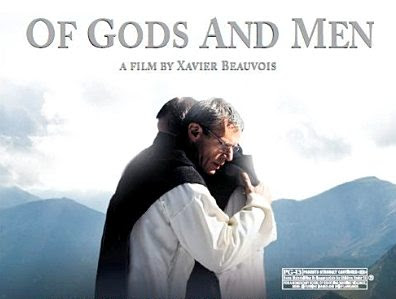
A French film entitled Of Gods and Men (Des hommes et des dieux), which won the Grand Prix at Cannes last year, has now been released with English subtitles. It is based on a true story of seven French monks kidnapped and massacred by Islamic bandits in Algiers in 1996.

Below is a review of the movie written for Gates of Vienna by the New York-based writer David Gurevich.


Of Gods and Men and Heroism of Faith
by David Gurevich

From pedophilia to corrupt Vatican banks, it has been a while since anyone in the media had a good word to say about the Catholic Church, one of biggest bêtes noirs of liberal media and artists. But in a new French movie by Xavier Beauvois called Of Gods and Men, such concerns are the last thing on the minds of eight monks quietly tilling their modest garden and treating villagers at the foot of Atlas Mountains in Algeria.

The monks are elderly and in poor health, but they happily persist in doing God’s work, and in between hoeing their garden and selling honey at the market and treating cases of eczema among local Arab children they never forget to praise the Lord. In fact, their choral singing, choreographed in a measured ascetic non-Hollywood way, makes for the most striking scenes. So how can such an unassuming group become a subject for such a richly dramatic and exceptionally timely film, based on the events that took place in Algeria in 1996?

Modernity invades abruptly. The anti-government Islamic Front issues an ultimatum: All foreigners must leave the country. At a nearby construction site, Croatian workers end up with their throats cut. The village elder’s granddaughter is stabbed for not wearing hijab. Finally, a local government official offers to post soldiers on the monastery territory (and is vehemently rejected) and then suggests that the monks should leave — “I can’t protect you.”

This is the real starting point when this deceptively simple routine of life of a religious community becomes a high drama of human heroism — and what inspires this heroism. Up until this scene, the Eight are rather nondescript old men in cassocks, save for their leader Christian (Lambert Wilson) and the elderly Dr. Luc (Michel Lonsdale).

As they debate whether they should leave or stay, they emerge as individuals, with their own human foibles and aspirations — one misses his family, his little grand-nephews and -nieces; yet he realizes that after so many years the monastery has become his real family, that serving God has glued them together as nothing else can, for it is the very meaning of the Faith and serving God that transcends human emotions. “I never meant to be a martyr,” says another. “But you already gave your life to God,” Christian argues.

And so they embark on this day-to-day struggle, trying to preserve faith in the face of everyday threats that come both from the Islamists who demand medical treatment and from the military who demand that the monks give up the rebels. And then there are the villagers who beg them to stay — “you are the branch, and we are the birds” — or, in other words, without you we’ll be done for. The monks cannot leave, and in a war like this the peaceful don’t survive. Continue Reading →

Fjordman: Metal and Early European Warfare

Thank you Fjordman for publishing this, as usual, excellent and informative essay.

Surprisingly early copper tools such as axes from around 5500 BC have been found at Plocnik, near Prokuplje south of Belgrade in Serbia. Archaeologist Julka Kuzmanovic-Cvetkovic comments that “These people were not wild,” pointing to fine statuettes recovered from the site. “They had finely combed hair and adorned themselves with necklaces.”

Before 5000 BC the inhabitants of the Lower Danube Valley and the Balkan foothills farmed, built sizable towns and mastered large-scale copper smelting. At its peak by 4500 BC, says Professor David W. Anthony, “Old Europe was among the most sophisticated and technologically advanced places in the world.” Admiring their colorful ceramics, a specialist in Egyptian archaeology noted that during this early period “Egyptians were certainly not making pottery like this.” The Spondylus shell from the Aegean was a special item of trade.

Long-distance trade of certain materials existed in prehistoric times. Amber (fossilized tree resin) has been used for jewelry for many thousands of years and was exported from the shores of the Baltic Sea to other European regions quite far back into the Stone Age. During the Copper Age and Bronze Age in Europe and Near East, metals initially served prestige and decorative purposes, but gradually became employed for practical tools and weapons as well.

Bronze is an alloy of copper, usually in combination with tin. It had been made before 3000 BC but didn’t become widespread until somewhat later. The period prior to this is sometimes called the Copper Age or Chalcolithic (Copper-Stone) Age, referring to the limited initial use of pure copper along with stone tools. Bronze is harder than copper and easier to cast. Its eventual replacement by iron for tools or weapons before and primarily after 1000 BC happened mainly because iron is much more abundant in the Earth’s crust than copper and tin. Continue Reading →

Fjordman Report: War and Human Accomplishment

War and Human Accomplishment.

Charles Murray’s book Human Accomplishment from 2003 has already achieved a well-deserved status as a modern classic. In this work, Murray not only ranks individual achievements and contributions in the arts and sciences; he also attempts to analyze some of the variables involved in rates of accomplishment, such as religion, political system and wars.

There is no doubt that the chaos, death and disruption caused by major wars can potentially limit human accomplishment. Among the most extreme cases in point would be the two great wars in Europe from 1914 to 1945, which caused an orgy of bloodletting and ideological radicalization and disrupted the very fabric of European civilization. Yet this does not imply that wars always have to have a similarly negative impact.

The conflicts between Catholics and Protestants during of the Thirty Years’ War ended with the Peace of Westphalia in 1648, which established the modern, sovereign European state. This fighting caused great devastation within the Holy Roman Empire, particularly in the mini-states of what we now call Germany. Yet from the late 1600s on, Johann Sebastian Bach spent his life in Germany between Weimar and Leipzig, and the eighteenth century in German-speaking Central Europe eventually turned out to be one of the most impressive periods in the history of music.

The first Persian invasion of mainland Greece ended with Athenian victory in a battle fought on the Marathon plain of northeastern Attica in 490 BC. According to legend, a soldier ran from the battlefield to Athens to announce the victory, a distance of roughly 42 kilometers. This consequently became the length of the long-distance footrace we now call marathon. Continue Reading →

An interesting little info-bit on the history of Islam in China

From Wikipedia with a hat tip to youtube’s, ‘Julianthephilosopher‘

Dungan revolt (1862–1877)

From Wikipedia, the free encyclopedia
“Dungan revolt” redirects here. For the later Hui revolt against the Qing, see Dungan revolt (1895–1896)

Veselovski-1898-Yakub-Bek.jpg
Yakub Bek

1862-1877


The Dungan Revolt was a religious and ethnic war in 19th-century China. It is also known as the Hui Minorities’ War. The term is sometimes used to refer to the Panthay Rebellion in Yunnan which occurred during the same period. It was an uprising by members of the Hui and other Muslim ethnic groups in China‘s Shaanxi, Gansu and Ningxia provinces, as well as in Xinjiang, between 1862 and 1877.

The uprising was chaotic and often involved warring factions of bands and military leaders with no goal or purpose, merely to fight, on the western bank of the Yellow River (Shaanxi, Gansu and Ningxia (excluding the Xinjiang province)). A common misconception is that it was directed against the Qing Dynasty, but there is no evidence at all showing that they intended to attack the capital of Beijing. When that rebellion failed, mass-emigration of the Dungan people into Imperial Russia, Kazakhstan and Kyrgyzstan ensued.

CBN: The Nazi-Islamic alliance

CBN Does it’s usual excellent job and doing what public schools should have been doing all along. Showing the unvarnished facts about history even if it does offend those with a vested interest in hiding the facts.

Thanks K, this lecture was spellbinding.

Here is the link K put in the comments. http://www.c-spanvideo.org/program/297544-1 This lecture is excellent from start to the last question.

The Soviet Story and Hitler’s Mufti.

There are two movies that I am posting specifically because of one of the comment threads on another post. As the commenters point out, Nazism was a kind of communism and was most certainly and, well I can’t say undeniably because the modern left has managed to convince people they were ‘far right wing’.

The movie I am posting below, The Soviet Story, is such an excellent document actually on Soviet Communism that in my opinion, no one should be able to pass grade 10 without succefully completing an exam on this film showing that at least they understand it. Below that, a film I subtitled myself with the help of several very hard working translators on Amin Al Husaini, Hitler’s mufti. Between these two films pretty much anyone should be able to understand the current world situation without much else with the possible exception of the exceptional film, Brainwashing 101

The Soviet Story:

You need to install or upgrade Flash Player to view this content, install or upgrade by clicking here.

The Turban and the Swastika: Hitler’s Mufti, Amin Al Husain

Lastly: PJTV’s Bill Whittle with the Narrative