
Category Archives: History
Dawkins attacks ‘alien rubbish’ taught in Muslim faith schools
So glad to hear some atheists speaking up on issues which they should be the front and center of, but are usually more politically correct than the other religious people.
From The Daily Mail:
By Hugo Gye
Last updated at 1:24 AM on 8th October 2011
 Attack: Richard Dawkins has criticised the teaching in Islamic schools
Richard Dawkins has attacked Muslim faith schools, saying that they teach students ‘alien rubbish’.
The noted atheist claimed that pupils were being taught to ignore scientific evidence in favour of following the Koran.
He said that he had even met a science teacher who believed that the earth was only 6,000 years old.
Mr Dawkins, a former Oxford professor who found fame as an evolutionary biologist before becoming a vocal opponent of religion, is a longstanding critic of all faith schools.
But he has said that Islamic schools are worse than others, as their teaching is more likely to be influenced by a religious agenda. Continue Reading →
What has Israel ever done to achieve peace in the middle east?
Clearly a spoof from one of my all time favorite movies
Witnessing History.

I get asked why I blog, why I talk to people and why I continually wade through the muck of modern decay.
I get asked why I put up with being called all sorts of names. After all, it can’t be pleasant, and it’s far from a delightful way to spend the day.
Why not let someone else make waves (not that I do much wavemaking – more like the occaional miniscule ripple).
Continue Reading →
Interesting Australian panel show with Daniel Pipes
Ignore the first five minutes about some union boss caught paying hookers with public funds, the rest is pretty interesting.
H/T to the good Sheik for this one
Does Secularism Make People More Ethical?
From Der Spiegel:
By Hilmar Schmundt

JASON GROW/DER SPIEGEL
Boston University Psychologist Catherine Caldwell-Harris has studied the difference between religious and secular minds.
Barry Kosmin is a different kind of market researcher. His data focuses on consumers targeted by companies like Lifechurch.tv or World Overcomers Christian Church TM. The sociologist analyzes church-affiliated commercial entities, from souvenir shops to television channels and worship services.
But the most significant target of Kosmin’s research is the consumer group most likely to shy away from such commercial products: secularists. “The non-religious, or Nones, hold the fastest-growing world view in the market,” says Kosmin. “In the past 20 years, their numbers in the United States have doubled to 15 percent.”
The director of the Institute for the Study of Secularism in Society and Culture at Trinity College in the US state of Connecticut, Kosmin is among the few researchers focused on the study of non-believers. This umbrella covers various groups including atheists, agnostics and humanists, as well as those who are simply indifferent to religion.
Secularists make up some 15 percent of the global population, or about 1 billion people. As a group, this puts them third in size behind Christians (2.3 billion) and Muslims (1.6 billion). Despite their large numbers, little is known about this group of people. Who are they? And if not religion, what do they believe in?
The Turban and the Swastika
This amazing documentary needs to be seen and understood by all. A team of us, about 2 years ago worked very very hard to get this out to the public after discovering it on a German-French European TV station. It has been lost a few times when my 7 load channel and youtube channel were removed. Now here it is again. Please watch and send the link out to all who you feel may benefit from knowing this but of WW2 history.
What are “the settlements”?
Thanks Don for sending me this:
Cyprus: The long decline of international law
• Cyprus: The long decline of international law
 EuropeNews July 20 2011
By Henrik R. Clausen
Today, July 20th 2011, marks the 37th anniversary of the Turkish invasion of Cyprus. While invading countries is generally held to be illegal (and rightly so), Turkey has gotten away with the invasion and the ensuing occupation with remarkable few consequences. This is in great extent due to the non-application of international law and fundamental principles in the matter. Conversely, a just and lasting solution to the Cyprus problem can be found in classical international law, common sense that is actually not too hard to understand.
Prehistory
Cyprus has a traceable archaeological history dating back more than 10,000 years, and while having been under a variety of rules over the last millennia, was never divided until the 20th century.

The St. Nicholas’ Cathedral in Famagusta
The Ottomans invaded Cyprus in 1570, finally beat the Venetian stronghold of Famagusta in 1571, and ruled over Cyprus for over three centuries. This took place in a relatively civilized manner as compared to the Ottoman rule in the Balkans and elsewhere, but they did introduce a Turkish minority later to be the seed of trouble.
In 1878, Cyprus was leased to Great Britain in return for Britain helping the Ottoman Empire hold back Russian influence.
In the 1923 Lausanne Treaty, which established the modern Republic of Turkey, all Turkish interests in Cyprus were written off, a fact that Turkey faithfully upheld until 1954. In 1925, Cyprus became a British crown colony, one of the last additions to the British Empire.
This frustrated many Cypriots hoping for the independence granted to other countries freed from Ottoman rule. In 1931 Cypriots (of all ethnicities, notably) rioted against the colonial rule, which unfortunately descended into violence and arson, led to the suspension of normal colonial rule. Allegedly, this also made the British decide to construct more mosques in order to strengthen the Turkish identity of the Muslim Cypriots, in order that Britain could maintain colonial rule there. Continue Reading →
Insulting Islamic stuff.
Below, a clip from Translating Jihad‘s youtube channel where a sheik explains that if someone insults the prophet they should be killed even if they repent later. Jihad Watch explains how this is different than insulting Allah for some reason. I figure I’ll be OK though. After all, the serial rapist, pedophile, mass murdering, war mongering lying bastard Mohamed was no prophet whatever else he was. So insulting the son-of-a-bitch should be just fine with these asshats.
The Multi-Layered Betrayal of Britain
In his latest guest-essay, the English author Paul Weston takes a clear-eyed look at the grim reality of Modern Multicultural Britain. Although his analysis is far from optimistic, he does remind us that everything in the UK is on the verge of counter-revolutionary change. There is no choice — the change has to come.

The Multi-Layered Betrayal of Britain
by Paul Weston
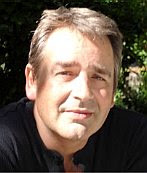 Poor old Britain is in a terrible state. Whilst the recent obscenity of a Labour government is mostly to blame for this, they were not alone in the cultural and racial war which has been waged against the British people over the last half-century. Such has been the all-encompassing assault on who we once were that it is now hard to find any social group which has not been betrayed.
For example:
The Wartime Generation: They sacrificed so much, indeed died in their hundreds of thousands in order that our generation could live in freedom. Today they are sidelined and ignored by the Socialist ruling classes, who consider the culture and politics of these aged warriors to be wildly out of tune with modern liberal group-think.
A book was published last year called The Unknown Warriors which collated the stories and concerns of this greatest, yet disregarded people. And it is a heartbreaking read. Over and over again these brave and stoic people mentioned one word — betrayal.
Their principal concerns were the submission of vast swathes of British cities to various foreign entities without due recourse to the democratic process, coupled with the bitter irony of handing over their bloodily defended democracy to an unelected, dictatorial foreign power in Brussels.
One particularly harrowing story was that of the extraordinary bravery shown by a Lancaster bomber rear-gunner, who continued to climb into his turret time and time again even as he saw scores of his friends killed in the most horrific ways imaginable. His bravery has been betrayed though, because he is now reduced to a prisoner within his own house, too frightened to go outside because of the violence and abuse he receives from Socialist-educated children as young as nine.
His despairing voice can be heard through another Royal Air Force veteran, who remarked eloquently of his comrades who had made the ultimate sacrifice for their country: “I mourned them then, but now surviving in a world indifferent to their hopes and dreams, I grieve more for the living.”
For the rest of this interesting and important article, please click over to GOV
Fjordman: Women, and Human Accomplishment
The book Human Accomplishment does not contain many female names. Has the author Charles Murray unfairly discriminated against women? I see little evidence of this. When reading the index for Western music I notice the absence of Hildegard von Bingen from the twelfth century, a German abbess and composer. She should perhaps have been included. Yet I also did not find the English composer and conductor Benjamin Britten, who was at least as prominent as her.
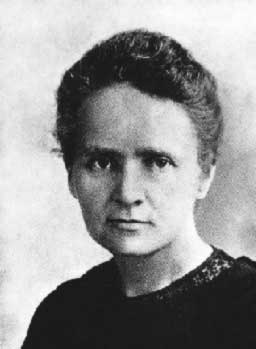
Marie Curie
Of women authors renowned for writing about issues relating to Feminism, the highest-ranking one in Western literature is Virginia Woolf, with an index-score of 12 out of 100. Mary Wollstonecraft who wrote A Vindication of the Rights of Woman (1792) is not listed, but her daughter Mary Shelley, remembered for the Gothic novel Frankenstein (1818), is.

Mary Shelley
Outside of Feminism and women’s issues, female contributions to the field of philosophy are quite tiny. Simone de Beauvoir receives a modest listing for The Second Sex (1949), but only in literature, not in Western philosophy. She receives a lower score there than the English sisters Charlotte and Emily Brontë and significantly lower than Sappho of Lesbos, Jane Austen or Mary Ann Evans, also known as George Eliot. Since the book ends in 1950 it does not mention Atlas Shrugged, a novel by Ayn Rand, first published in 1957 in the USA, The Feminine Mystique, published by Betty Friedan in 1963, or Silent Spring (1962) by the American conservationist Rachel Carson, which helped inspire the environmental movement. Continue Reading →
Iran threatens ‘serious action’ over BBC plans to screen documentary series on Muslim prophet Muhammad
It is interesting that Robert Spencer is featured in this, but I wonder if the editing of him left his views intact. This should be interesting in any case. I wonder what Iran plans. Maybe they will hang a few more of their own minorities, gay people and journalists.
from The Daily Mail:
Last updated at 8:57 PM on 7th July 2011
 The Life of Muhammad will be presented by journalist Rageh Omaar
The BBC is courting controversy with its plans to broadcast a documentary series about Muslim prophet Muhammad.
Three-part series The Life of Muhammad has already been blasted by officials in Iran, who claim the country will take ‘serious action’ if it is screened.
The Iranian minister of cultural and Islamic guidance, Mohammad Hosseini, who has yet to watch any of the series, has branded the film an attempt by the ‘enemy’ to ‘ruin Muslims’ sanctity’.
‘The BBC’s decision to make a documentary on the life of [the] prophet Muhammad seems dubious and if our suspicions are proved to be correct, we will certainly take serious action,’ he told Iran’s Fars news agency. Continue Reading →
Lab yeast make evolutionary leap to multicellularity
When I was younger and struggling with the concepts of evolution as generally understood, one of the things that made it very hard for me to accept as a package was the issue of how a single celled creature could become a multi-celled creature by natural selection. That was answered to my satisfaction some years ago when I read about the Volvox, a colony animal that is an obvious intermediary between single celled and multi-celled animals well described in the superb book, ‘The Selfish Gene’ by Richard Dawkins.
This however, is even more compelling evidence. Thanks to Fjordman for the link.
From New Scientist:

IN JUST a few weeks single-celled yeast have evolved into a multicellular organism, complete with division of labour between cells. This suggests that the evolutionary leap to multicellularity may be a surprisingly small hurdle.
Multicellularity has evolved at least 20 times since life began, but the last time was about 200 million years ago, leaving few clues to the precise sequence of events. To understand the process better, William Ratcliff and colleagues at the University of Minnesota in St Paul set out to evolve multicellularity in a common unicellular lab organism, brewer’s yeast.
Their approach was simple: they grew the yeast in a liquid and once each day gently centrifuged each culture, inoculating the next batch with the yeast that settled out on the bottom of each tube. Just as large sand particles settle faster than tiny silt, groups of cells settle faster than single ones, so the team effectively selected for yeast that clumped together.
Sure enough, within 60 days – about 350 generations – every one of their 10 culture lines had evolved a clumped, “snowflake” form. Crucially, the snowflakes formed not from unrelated cells banding together but from cells that remained connected to one another after division, so that all the cells in a snowflake were genetically identical relatives. This relatedness provides the conditions necessary for individual cells to cooperate for the good of the whole snowflake.
“The key step in the evolution of multicellularity is a shift in the level of selection from unicells to groups. Once that occurs, you can consider the clumps to be primitive multicellular organisms,” says Ratcliff.
Please click over to New Scientist for the rest of this fascinating and important article.
As a post script, to any Catholic readers, they may be interested in this article, which is not the best one I have read on the unequivocal support the Vatican has for Darwin but it still makes the point.
Fjordman: The in-depth evaluation of Charles Murray’s book Human Accomplishment continues.
Fjordman honours Vlad Tepes with the second in his essay series on the most interesting and (in my opinion) excellent book, ‘Human Accomplishment’ by Charles Murray, co-author of The Bell Curve’
By Fjordman. This is part II. Part I is here.
The in-depth evaluation of Charles Murray’s book Human Accomplishment continues.
In physics we find the English mathematician, astronomer, theologian and alchemist Isaac Newton (1643-1727) in first place, tied with Albert Einstein (1879-1955), born in Germany to a Jewish family, later becoming a Swiss as well as an American citizen. Behind them follow the prolific New Zealand-born British nuclear physicist Ernest Rutherford (1871-1937); the English naturalist Michael Faraday (1791-1867), a great pioneer in the fields of electromagnetism and electrochemistry; the brilliant Italian naturalist, mathematician and experimentalist Galileo Galilei (1564-1642); the gifted and highly eccentric English experimental and theoretical physicist Henry Cavendish (1731-1810); the quantum and nuclear physicist Niels Bohr (1885-1962) from Denmark, known for his contributions to atomic theory; the English physicist Joseph John “J. J.” Thomson (1856-1940) who discovered the electron, the first subatomic particle; the Scottish mathematical physicist James Clerk Maxwell (1831-1879), whose insights into electromagnetism and light were of fundamental importance for modern science and technology; the French physicist Pierre Curie (1859-1906), a pioneer in the study of crystallography, piezoelectricity and radioactivity.
After them comes Gustav Robert Kirchhoff of Germany (1824-1887), who developed spectroscopy for chemical analysis of the Sun and coined the term “blackbody” radiation, later used by fellow German physicist Max Planck; the Italian-born scientist Enrico Fermi (1901-1954), who made many contributions to nuclear and particle physics; the German scientist Werner Heisenberg (1901-1976), remembered for his work in the field of quantum mechanics and the formulation of his famous uncertainty principle in 1927; the Polish-born France-based physicist and chemist Marie Sklodowska Curie (1867-1934), known especially for her studies together with her husband Pierre of radioactivity, a term she coined; the English theoretical physicist Paul Dirac (1902-1984), who made great contributions to quantum mechanics and electrodynamics and predicted the existence of antimatter; the English scientific brewer James Prescott Joule (1818-1889), who studied the nature of heat and helped establish the conservation of energy principle and the First Law of Thermodynamics; the Dutch polymath Christiaan Huygens (1629-1695), who among many other things developed a wave theory of light; the English physician and natural philosopher William Gilbert (1544-1603), who introduced the term and concept “electricity” and whose work De Magnete described experimental studies of magnetism; the English physician and physicist Thomas Young (1773-1829), whose double-slit experiments conducted around the year 1800 converted many European naturalists to a wave theory of light; and finally the dynamic English natural philosopher and instrument maker Robert Hooke (1635-1703).
Newton’s and Einstein’s top position in this category should surprise nobody. Galileo’s ranking, based exclusively on his status as a founder of modern physics, not his contributions to astronomy, is uncontroversial. Rutherford discovered two types of radioactivity, described the nucleus of the atom and helped to develop our understanding of the subatomic world, bombarded atomic nuclei to change their composition and made many other valuable contributions. Faraday’s work on induction and on electricity and magnetism in general was of fundamental importance to the development of electrical generators and engines.
Other prominent physicists are Max Planck, Wolfgang Pauli, Hans Christian Ørsted, Antoine Henri Becquerel, Ludwig Boltzmann, Heinrich Hertz, John William Strutt (Lord Rayleigh), Evangelista Torricelli, Carl David Anderson , Hans Geiger, René Descartes, Otto von Guericke, Guillaume Amontons, George Gabriel Stokes, Archimedes, Amedeo Avogadro, Jacques Charles, Democritus, Hendrik Lorentz, George FitzGerald, Heike Kamerlingh Onnes, Ernst Mach, Thales of Miletus, Johannes Diderik van der Waals and Charles T. Wilson.
Some lesser, but still significant names are Victor Hess, Jean le Rond d’Alembert, Loránd Eötvös, Pyotr Kapitsa, Leonardo da Vinci, Pierre Prévost, Daniel Gabriel Fahrenheit, Joseph Sauveur, Charles Cagniard de la Tour, Carl von Linde, Louis Paul Cailletet and Raoul Pictet.
Among those who studied electricity in addition to Faraday, Cavendish, Gilbert and Ørsted we find François Arago, André-Marie Ampère, Charles-Augustin de Coulomb, Charles du Fay, Benjamin Franklin, Stephen Gray, Francis Hauksbee, Joseph Henry, Ewald Georg von Kleist, Pieter van Musschenbroek, Jean-Antoine Nollet, Georg Ohm, William Sturgeon, Alessandro Volta, Wilhelm Weber, Charles Wheatstone, Jean Peltier and Thomas Johann Seebeck. It is in my opinion wrong not to mention the German naturalist Franz Aepinus, who published the first mathematical theory of electric and magnetic phenomena in 1759. He was at least as important in this field as was his Swedish-born student Johan Wilcke, who is listed.
Another group of people besides James Joule and Ludwig Boltzmann were associated with the emergence of what we now know as thermodynamics: Nicolas Carnot, Rudolf Clausius, Josiah Willard Gibbs, Hermann von Helmholtz, Julius Robert von Mayer, Leopoldo Nobili, Alexis Petit, Benjamin Thompson (Count Rumford) and William Thomson (Lord Kelvin).
Hippolyte Fizeau and Léon Foucault in France measured the speed of light with great accuracy in the mid-1800s, followed by Albert Michelson and Edward Morley in the USA. Many names in addition to Maxwell, Huygens and Young are related to studies of the properties of light in the widest possible sense: Ibn al-Haytham (Alhazen), Johann J. Balmer, Anders J. Ångström and Henry A. Rowland, Erasmus Bartholin, Jean-Baptiste Biot, David Brewster, Pavel Cherenkov, Ilya Frank and Igor Tamm, Christian Doppler, Joseph von Fraunhofer, Augustin-Jean Fresnel, Dennis Gabor, Francesco Grimaldi, Pyotr Lebedev, Étienne-Louis Malus, Chandrasekhara V. Raman, Willebrord Snell, Johannes Stark, Josef Stefan, Paul Villard, Wilhelm Wien and Pieter Zeeman. After their discovery in 1895 by Wilhelm Röntgen, X-rays were used for fundamental scientific research by Max von Laue, Henry Moseley, Charles Barkla, William H. Bragg and William L. Bragg, Arthur Compton and many others. William D. Coolidge in the USA invented an improved X-ray tube in 1913.
Many individuals mentioned in the index of Human Accomplishment are remembered for studies of the subatomic world, quantum physics and nuclear fission, among them Max Born, Walther Bothe, Louis de Broglie, James Chadwick, John Cockcroft, Ernest Walton, Clinton Davisson, Johann Geissler, Eugen Goldstein, Frédéric Joliot-Curie, Irène Joliot-Curie, Ernest Lawrence, Philipp Lenard, Fritz London, Heinz London, Ernest Marsden, Maria Goeppert-Mayer and Johannes Hans Daniel Jensen, Edwin McMillan, Vladimir Veksler, Lise Meitner, Otto Frisch, Robert Millikan, Erwin Schrödinger, Emilio G. Segrè, Arnold Sommerfeld, Fritz Strassmann, Leó Szilárd and Julius Robert Oppenheimer, George P. Thomson, Ida Noddack, Walter Zinn, Hideki Yukawa and Cecil Frank Powell (but not César Lattes).
Following Paul Dirac’s lead, Richard Feynman, Julian Schwinger and Sin-Itiro Tomonaga from Japan developed quantum electrodynamics and shared the Nobel Prize in Physics in 1965 for this. Why is Glenn T. Seaborg not ranked in either physics or chemistry for his involvement in the discovery of a number of transuranium elements, among them plutonium?
The Hungarian-born Jew Leó Szilárd was partly responsible for initiating the Manhattan Project through writing the Einstein-Szilard letter sent by the famous scientist Einstein to President Franklin D. Roosevelt in August 1939, urging the USA to study the use of nuclear fission for weapons before Nazi Germany could make such devices. Another Hungarian Jew who became a key person in the American nuclear program was Edward Teller. He was to play a central role in the development of thermonuclear weapons, or hydrogen bombs.
Continue Reading →