
Excellent article on multiculturalism in Holland

h/t The Force of Reason

Wilders: Calculate cost of immigrants

Published: 23 July 2009 12:00 | Changed: 24 July 2009 14:51

The anti-immigration party of Dutch populist Geert Wilders wants each ministry to make a cost-benefit analysis of the presence of non-Western immigrants and their offspring in the Netherlands.

By Barbara Rijlaarsdam and Herman Staal

Turkish and Moroccan women take part in an integration course at Rotterdam's World Museum.   Photo Vincent Mentzel
Turkish and Moroccan women take part in an integration course at Rotterdam’s World Museum.
Photo Vincent

Mentzel

When Geert Wilders first brought up what he called “the cost of multiculturalism” in the Dutch parliament last year, he got mostly laughs. Wilders claimed non-Western immigration had already cost the Netherlands 100 billion euros and speculated about how that money could have been put to better use. Every elderly person could have had his or her own room in a nursing home, Wilders suggested; we could all have retired at 50, “or we could have given everybody in the Netherlands a free sailboat.”
But now his Party for Freedom (PVV) is taking the matter up again in a more serious manner: PVV member of parliament Sietse Fritsma has requested a cost-benefit analysis of the presence of non-Western immigrants or ‘allochtonen‘ (see insert) in the Netherlands from all twelve Dutch ministries.
That may be a difficult question to answer. For instance, Fritsma wants the transport ministry to calculate how much of the department’s expenses are due to immigrants. This would mean calculating, among other things, how many drivers struck in traffic jams throughout the Netherlands are immigrants.

The PVV also wants to know how much taxes immigrants pay, how often they go the doctor’s and what percentage of police interventions is related to immigrants

Fritsma wants every ministry to come up with figures for the current year, the past five years, and prognoses for the coming year and the next five years. It remains to be seen if the ministries will respond to the PVV’s request.

Some research has already been done into the costs and benefits of labour migration. Last year, Wilders quoted from a 2003 study by the economic policy bureau CPB, but that study did not have the 100 million euro figure. It is unclear how Wilders reached that figure.

The CPB study did come to the conclusion that immigrants cost more over a lifetime (in health care, education, pensions and social security) than they contribute in taxes.

The CPB calculated that an immigrant who arrives in the Netherlands at age 25 will cost Dutch taxpayers 43,000 euros over the rest of his lifetime. (The study did not look into second or third generation immigrants.) It concluded that the Dutch economy as a whole does not benefit from large-scale immigration, and that immigrants are not the answer to the ageing of the Dutch population. However, the study did recommend limited immigration of skilled workers for specific jobs that are hard to fill otherwise.

Economist Pieter Lakeman made an attempt at a cost-benefit analysis of immigration in the Netherlands ten years ago. He said he was the first to ever do so. In his book Binnen zonder kloppen (Enter without knocking), he argued that immigrants were a considerable write-off, costing the government 13 billion guilders (5.9 billion euro) a year. Immigrants from Turkey and Morocco alone have cost the Netherlands more than 70 billion guilders (31.8 billion euro) in the twenty years until the year 1999.

“Without anybody noticing, Dutch immigration policy has become one of the most wasteful forms of government aid around,” Lakeman told NRC Handelsblad at the time.

When the Dutch government returns from summer recess in August, ministers will have to decide how to respond to the PVV’s request: individually or collectively. The latter is the more probable. One thing is for sure: the PVV intends to make the cost of immigration the hot potato of the next political season.
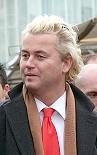
Socialists call for revolt against Wilders in Holland.

An Elite Revolt Against Geert Wilders: Gates of Vienna

by Baron Bodissey

The electoral success of Geert Wilders has spooked the traditional Dutch ruling class so badly that it seems to be willing to use extra-constitutional — or even extra-legal — means to get rid of him.

Our Flemish correspondent VH has composed a report on latest efforts to depose Mr. Wilders by the elites. He offers this introduction:

A Dutch (Socialist) Cabinet Minister last week openly called for a revolt against Geert Wilders and his electorate.

I always thought that openly calling for a revolt was considered a criminal act, but seemingly I am wrong: it is PC, as long as it is of “the elite” against “the right”. Socialist Minister: “I really believe that a revolt of the elite is desperately needed.”

The first translation is from Elsevier:

Wilders: The political elite demonizes and castigates

“Government in panic”

By Luc van Kemenade

Geert WildersPVV leader Geert Wilders accuses members of the Cabinet and the Lower House of demonizing him and creating a climate in which a madman might proceed to attack him [similar to what happened to Pim Fortuyn after being demonized].

Several Cabinet members recently opened fire on Wilders, who recently said in an interview with newspaper de Volkskrant not to be impressed: “It’s pure panic. Until June 4, they could say that these were only polls. Until that night came, right after the elections. Then it became reality.”

The PVV leader says he regularly has to wear a bulletproof vest, “but for the little water pistols of all those Ministers, I do not necessarily need to wear that.”

Attack

After the major victory of Wilders’ Party for Freedom (PVV) in the elections for the European Parliament, the government began its attack on him.

Wilders received fierce criticism from amongst many others Integration Minister Eberhard van der Laan (PvdA, Socialists), who challenged him to a debate (“Come on”). Minister of Defense, Eimert van Middelkoop (Christian Union) said the threat-outline that the PVV warns about is “hysterical”, and State Secretary of Economic Affairs, Frans Timmermans (PvdA, Socialist), finds the PVV party “indecent”.

Revolt

Continue Reading →

Geert Wilders in Denmark:

Thanks to Gates of Vienna for posting these, I have recompiled them as one video instead of four.

For those of you who like me, have heard Geert speak more than once, do not skip this one. He does give new information and some stunning statistics about Muslim immigration to Western Europe among other things. This is not a repeat of speeches you have heard before.

[kaltura-widget wid=”dmjxvwkn94″ width=”410″ height=”364″ addpermission=”3″ editpermission=”3″ /]

Dutch divided over Geert Wilders as radical MP eyes premiership

Until last week, the Bernard family had the normal concerns of any middle-class Dutch family – putting their teenage children through university, living a greener life, and paying the mortgage.

By Nick Meo in Rotterdam
Published: 7:00AM BST 14 Jun 2009
Geert Wilders leads Dutch polls
Geert Wilders began to see a rise in his popularity after an Amsterdam appeals court decided to try him for anti-Muslim comments in January Photo: EPA

But that has all changed since the European election – and the triumph by Geert Wilders, the right-wing populist and outspoken critic of Islam who in February was banned from entering Britain as a threat to “community harmony”.

To many abroad Mr Wilders, a Dutch MP, appears an old-fashioned racist whose views put him on a par with other far-Right politicians elsewhere in Europe.

Yet in its first ever test of national electoral support among the normally tolerant Dutch, his anti-immigration Party for Freedom which he founded in 2006 won 17 per cent of the votes – making it the second biggest party. That has shaken the country to its core – opening up the real possibility that, through the Dutch coalition system, Mr Wilders could win power at the next general election.

Now, like many others in the Netherlands, the Bernards are desperately worried. “This has the feeling of what happened to Germany in the 1930s,” said Alfred Bernard, 52, a lawyer. “Wilders blames foreigners for everything. People are disoriented because of the economic crisis. Everywhere there is dissatisfaction with mainstream politicians.

“After this I really believe that Wilders could become prime minister in the 2011 parliamentary elections, or at least set the political agenda.”

In an interview with The Sunday Telegraph, Mr Wilders, 45, was frank about that ambition. Asked about the prospect of taking power in two years’ time, he said: “That is our biggest job. We had an enormous success last week and our biggest task is to keep up momentum. I am very confident that we will have an excellent result.

“If my party becomes the biggest party, I would be honoured to be prime minister.”

Sitting in his office in the Dutch parliament building in The Hague, protected from the threat of assassination by 10 armed secret service bodyguards, he summed up his antipathy to the religion of many immigrants to the Netherlands.

“Islam wants to dominate our society,” he said in fluent and only slightly accented English. “It’s in opposition to freedom.

“If people are offended, that’s not my aim. I don’t talk about Muslims but about Islam. Everything I say is against the fascist Islamic ideology.”

To the charge that to many his views appeared to be racist, he responded: “If that was true, we would never have been the second biggest party in the European elections.”

Why, then, did Moroccans and Turks living in the Netherlands so fear him? “As long as they don’t commit crimes, it’s a baseless fear,” he said. “If you adhere to our laws, if you act according to our values, you are free to stay. We will help you to integrate.

“But if you cross the red line, if you start committing crimes, if you want to do jihad or impose sharia, we want you to be sent out of the Netherlands and we will get rid of your permits to stay.”

An admirer of Churchill and Lady Thatcher, he is charismatic as well as combative. Holland’s conventional politicians – mostly dull men in suits – have no idea how to counter his politically incorrect taunts, which outrage the parliamentary chamber but delight his supporters.

He has come a long way since the days when he could be lightly dismissed as an eccentric fringe politician with an extraordinary blond quiff, known mainly for baiting Muslims.

“Half of Holland loves me and half of Holland hates me. There is no in-between,” Mr Wilders said. “This is a new politics, and I think it would have a great chance of success in other European countries. We are democrats. On economic and social issues we are centrist. We want tougher laws on crime and we want to stop Holland paying so much money to the European Union.

“We would stop immigration from Muslim countries and close Islamic schools. We want to be more proud of our identity.”

He admitted that he is frustrated at his image abroad, especially in Britain, a country which he admires. He claimed to believe in freedom above all else and pointed out that he is despised by Holland’s Neo-Nazis, who dubbed him the “blond Zionist” because of his links to Israel – a country which he has often visited and where he counts politicians among his friends.

He is still angered at being banned from entering Britain, where he had been invited to show his controversial 17-minute film linking the Koran with the September 11 terror attacks. Muslim groups were among those who campaigned against his admission, and he dismissed the Home Office ruling as an attempt at “appeasement” of Islam.

Dutch liberals groaned when the British Government refused entry, because they knew Mr Wilders would milk the decision to generate massive publicity at home. He is also being prosecuted in Holland for promoting hate crimes, a case which is thought unlikely to succeed but which has allowed him to pose as a martyr.

In the European Parliament his four MEPs will not ally with the British National party, he said, claiming he had never met a BNP Member. “I understand they talk a lot about blacks and whites. This is disgusting,” he sai Continue Reading →

Dutch freedom party ‘gain’ in EU poll

geert

Exit polls showed late on Thursday that Mr Wilders’ Freedom Party (PVV) was on course of winning just over 15% of votes in the Netherlands.

from the BBC

A right-wing Dutch lawmaker’s party has made big gains in European Parliament elections, exit polls suggest.

They say Geert Wilders’ Freedom party will win four of the 25 Dutch seats in the parliament, just one behind the country’s Christian Democrats.

Dutch and British voters were the first to go to the polls to elect the EU’s most powerful legislative body.

Some 375 million people in 27 member states are eligible to vote. Most will cast their ballots over the weekend.

Voters are deciding who is elected to the 736 seats up for grabs under various forms of proportional representation.

Polls closed in the Netherlands at 1900 GMT and in Britain at 2100 GMT on Thursday.

Observers will be watching to see if turnout is higher than in 2004, when only 45% exercised their right to vote.

In the UK, elections were also held in some areas for local councils.

The results of both polls are keenly awaited to see how they might affect the national political scene, following weeks of turmoil over MPs’ expenses claims.

The vote is seen as a crucial test for the governing Labour Party, with a general election due within a year. Three senior ministers resigned earlier this week.

Irish voters go to the polls on Friday. Latvia, Cyprus, Malta and Slovakia vote on Saturday, while the Czech Republic and Italy vote over Friday and Saturday, and Saturday and Sunday respectively. People in the remaining 18 member states will vote on Sunday.

‘For the Netherlands’

Exit polls showed late on Thursday that Mr Wilders’ Freedom Party (PVV) was on course of winning just over 15% of votes in the Netherlands.

If confirmed, the result is second only to Dutch Prime Minister Jan Peter Balkenende’s Christian Democrats (CDA), which dropped alsmost 5% to just under 20% of the vote.

The polls showed that the party’s governing coalition partner, the PvdA, was the biggest loser – down nearly 10% to about 14% of the Dutch vote.

“We dare to talk about sensitive subjects like Islamisation and we use plain and simple words that the voter can understand,” Mr Wilders has said.

Mr Wilders was refused entry to Britain in February on the grounds that he had sought to incite hatred with a film he made last year that equated Islam with violence and likened the Koran to Mein Kampf.

The controversial politician is also facing prosecution in the Netherlands for making anti-Islamic statements, following a court ruling the previous month.

Despite the charges many Dutch voters seem to like what Mr Wilders is saying, the BBC’s Geraldine Coughlan in The Hague reports.

His party was campaigning under the motto “For the Netherlands” and was extremely anti-EU, our correspondent says. Mr Wilders has said he will not take up his seat if elected as an MEP.

Polls show that Euroscepticism among Dutch voters has increased since the last European elections, with EU enlargement and integration the most unpopular issues, our correspondent adds.

Across Europe, far-right parties are hoping to win at least 15 seats. However, the centre-right European People’s Party bloc is expected to remain the main force, followed by the European Socialists.

Wilders Hopes for Flemish Independence

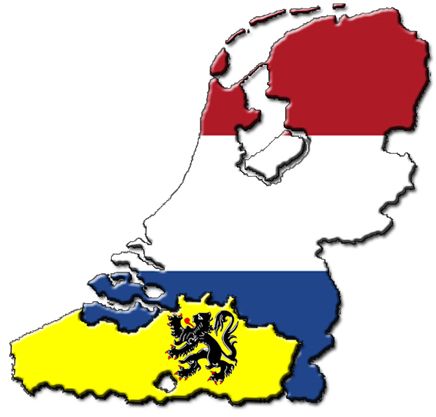
The Dutch opposition leader Geert Wilders, whose Freedom Party PVV remains the biggest in the polls, wants the Dutch government of Prime Minister Jan-Peter Balkenende to help dissolve Belgium so that Flanders, the Dutch-speaking northern half of Belgium, can be reunited with the Netherlands.

Hat tip Bjorn: From The Brussels Journal

flanders

Wilders refers to a recent survey of East West Global Index which indicates that Belgium ranks 152nd in a list ranking 200 countries by their reputation, behind countries such as Algeria, Romania, Libya, Liberia, Eritrea and South Ossetia.

Wilders and his fellow MP Martin Bosma have also asked the Dutch government to replace its ambassador to Belgium by an ambassador to Flanders, who is to help the Flemings achieve their independence as a first step towards reunification with the Netherlands. “Belgium is almost history. Great. The future is for an independent Flanders in a federation with the Netherlands,” Wilders said in a statement today.

Wilders is expected to win the European elections next month. In an attempt to stop the growth of the PVV, the centrist Dutch parties, the Christian-Democrats of Mr. Balkenende and the Liberals, have begun to copy his position on Europe (less power to the European Union and no admission of Turkey to the EU). Many Flemings hope that they will copy his position on Flanders, too.

Earlier this week, Flemings were reminded that Belgium is bad for Flanders when politicians from Wallonia, the French-speaking southern part of Belgium, campaigned against the candidature of Luc Van den Brande, a Flemish Christian-Democrat and former leader of the Flemish regional government (1992-1999), to become the next Secretary General of the Council of Europe in June 2009.

Initially it looked like Mr. Van den Brande would get the job for which he had the support of Karel De Gucht, the Belgian Foreign Minister, a Flemish Liberal. Walloon politicians, however, objected to Mr. Van den Brande having the position because, though he is a moderate who defends the Belgian state, he is in favour of more autonomy for Flanders.

The Walloons wrote a letter to the representatives of the Council of Europe, an organisation of 47 European nations, objecting to their compatriot getting the job. Even Olivier Chastel, the Belgian Deputy Foreign Minister, who is a Walloon Liberal, spoke out against Van den Brande. As a result, Mr. Van den Brande has been removed from the shortlist of candidates for the top position at the Council of Europe. This has made many Flemings aware that, despite the fact that they are the majority in Belgium, their interests will never be defended by Belgium.

Meanwhile, the political debate in the Netherlands centers on the question whether political parties are willing to join a coalition led by Mr. Wilders if his PVV becomes the biggest party in The Hague in the next general elections in May 2011. All the parties of the Dutch Left have ruled out a coalition with Wilders, but the centrist parties have not.

See also:

Wilders Looks for European Allies, Suggests Reuniting Flanders and Netherlands, 12 May 2008

Bruce Bawer on Vlaams Belang

I would like to remind everyone that one of the very first and very best books on the issue of Islam and the west, and the conflict between Islamic values and western liberal democratic ones, is Bruce Bawer’s most excellent book ‘While Europe Slept’. If Bruce has issues with Vlaams Belang it doesnt make them solid as not a lot of actual evidence is presented here, however it is worth noting. Bruce is a staunch supporter of Geert Wilders (as am I) and Pim Fortyne. Here is the article Bruce reently did on Vlaams Belang. Have a read. The enemy of my enemy can be my freind but it can also be the Hayekian strong man. It was in fact Bruce’s book, and a speech given at a Pim Fortuyn memorial service that along with Mark Steyn’s book ‘America Alone’ motivated me to begin blogging and working for the preservation of liberalism and individualism in opposition to leftism statism and Islam.

Wednesday, May 6, 2009, 9:28 P.M. CET: Recently, Andrew Sullivan posted a link to an article about Charles Johnson, the celebrated blogger who has distanced himself from many other anti-jihadists and called them “a bunch of kooks.”  Though it grieves me to say so, and though I’ve hoped that things would somehow turn around, Charles is, alas, not whistling Dixie: I can testify that in the last couple of years some significant, and lamentable, shifts have taken place on the anti-jihad front.  Writers and bloggers whom, not very long ago, I would unhesitatingly have described as staunch defenders of liberal values against Islamofascist intolerance have more recently said and done things that have dismayed me, and that, in many cases, have compelled me to re-examine my view of them.

Once upon a time, these people made a point of distancing themselves from far-right European parties such as Belgium’s Vlaams Belang – whose most prominent Internet voice, Paul Belien, has declared himself to be fighting for “Judeo-Christian morality” not only against jihadist Islam but also against “secular humanism.”  Belien has made no secret of his contempt for gay people and for the idea that they deserve human rights as much as anyone else.  Now, however, many of the anti-jihadist writers who once firmly rejected Vlaams Belang have come to embrace it wholeheartedly.  In fact, for reasons unknown to me, this regional party in one of Europe’s smallest countries appears to have become, for a number of anti-jihadist writers on both sides of the Atlantic, nothing short of a litmus test: in their eyes, it seems, if you’re not willing to genuflect to VB, you’re not a real anti-jihadist.

For the rest of this article please visit Bruce Bawer’s blog:


Geert Wilders speech in L.A. Spanish subtitles

[kaltura-widget wid=”fsl2rl07zo” width=”510″ height=”439″ addpermission=”3″ editpermission=”3″ /]

A special thanks to many people who did very hard and laborious work to make the Spanish subtitles possible. First, AMDG from “La Yijad en Eurabia” and ‘Montcalm’ who clearly understands the urgency and severity that Geert Wilders Message gets out to the Spanish speaking world. Thank you both for your efforts. I pray this achieve our common purpose.

Wilders’ ideas enjoy 40% support

wilders-with-background

From Dutch News. nl

Some 40% of the Dutch population agree with many of anti-Islam MP Geert Wilder’s statements, according to research by TNS Nipo for magazine Vrij Nederland.

According to opinion polls, Wilders would take about 18% of the vote if there was an election tomorrow. But this research shows support for his ideas is much wider, Vrij Nederland says.

Some 42% of those polled agreed with the statement that Wilders says ‘what ordinary people believe and want’. Some 35% do not think Wilders goes too far in his comments about Islam and Muslims and 38% agree with Wilders’ statement that Muslims have come to the Netherlands ‘to take things over’.

A large majority – 61% – agree with Wilders’ call for ‘street terrorists’ to be deported. Wilders used the phrase to describe gangs of youths, mainly of Moroccan origin.

Although support for Wilders among people with a university education has increased slightly, his main support is still found among ‘the ordinary man who does not feel that the established parties take him seriously,’ said researcher Peter Kanne.

‘They’re back and now they’re mad’. Wilders plans a sequel to fitna.

Of course I have no idea what Geert Wilders will call the sequel to his short film on Islam, ‘Fitna’ but I suggest the one above. Of course, its hard to tell when a Muslim is mad and when he is not so the title may be misleading.

From Fox news:


THE HAGUE, Netherlands —  A Dutch lawmaker says he plans to make a sequel to the anti-Islamic movie that sparked protests among Muslims around the world last year.

Geert Wilders says in an interview with a Dutch newspaper that the film will likely come out next year.

He says it will be different from “Fitna,” the film he released on the Internet that coupled images of terror attacks with verses from the Quran.

Click here to watch ‘Fitna.’

“This is the next phase,” Wilders says in the interview printed in Thursday’s edition of De Telegraaf.

Wilders leads the Freedom Party, which has nine lawmakers in the 120-seat Dutch Parliament.

He was banned from visiting Britain in February because the government deemed him a threat to “community harmony and therefore public security.”