
From European Son
 Norwegian terrorist Anders Breivik’s “spider web of hate” was revealed today by the Guardian newspaper. The Guardian says it has analyzed the websites Breivik linked to in his manifesto, and those websites which linked to it. The interactive map, with nodes showing links between websites, is comprehensive — perhaps too much so. Unpredictably… continue reading!
Category Archives: Fjordman
Oh I get it now! The ‘Lee Harvey Norway’ connection to Fjordman and the rest of us ‘islamophobic’ bloggers
This guy really is good
Fjordman: My Afternoon With The Police
The following message just came in from Fjordman, who adds that he intends to keep a low profile in the near future.

I am shocked by the hostile treatment I received at the hands of the police.
Lars Hedegaard heard my story and commented that he had never known of any witness who has been treated in this manner in any Western country, except for totalitarian societies such as the Third Reich.
My lawyer, who is experienced and has seen many tough cases before, did not expect anything like this to happen. He assumed this would be relatively easy, and even suggested that I might get by without a lawyer. I insisted on having one present just in case, which most likely helped a little bit. Things would have been even worse had that not been the case. My lawyer later said that in my case they operated at best at the very fringes of what could be considered legal.
I was never accused of doing anything criminal, obviously because I had nothing to do with the terror attacks and they know this. Yet without the slightest hint of proof of any lawbreaking, I was treated as a murder suspect.
To my total surprise I had to go to my flat, where for several hours half a dozen police officers went through all of my DVDs, searched through my old printed travel photographs from years back, searched through all of my (many) books, checked my kitchen equipment, went through all of my clothes, and confiscated a suitcase that contained nothing more than clothes and some books. They also confiscated several digital devices, including my camera and my laptop. It is quite clear that they wanted information about non-violent Islam-critical networks in Europe that they suspected might be contained in my PC, even though they denied this to me.
Please remember that the police and the Police Security Service (PST) apparently had no clue who I was until I literally knocked on their door of my own free will, even though I knew full well that I would have to give up my anonymity after doing so. I had very little information about Breivik since I have never met him, something which he himself has admitted, yet I still handed over what little information I had. I also answered their questions honestly, even though, technically speaking, I did not have to do so.
If you believe the mass media, the police were still not sure that I really was Fjordman until a couple of hours after I had turned up at the police station. As soon as they understood that this was indeed the case, they rushed through a quick decision to search my flat and confiscate my computer equipment immediately. They must have realized at this point that I had nothing at all to do with the terror attacks.
I personally suspect that this was mainly a political decision.
The Forced Resignation of Fjordman
From Gates of Vienna Verbatim:
Our regular readers know the writings of Fjordman, and are familiar with what has happened to him in the two weeks since Anders Behring Breivik murdered seventy-six people in Oslo and on the island of Utøya.
Our thousands of new readers also know who Fjordman is — or at least they know the media construct labeled “Fjordman”, which has little or nothing to do with the reality of the man who chose that pseudonym when writing about the ongoing destruction of European civilization.
Yesterday, after receiving legal advice, Fjordman chose to visit the police, reveal his identity, and answer any questions they posed. Contrary to media reports, the police did not “discover” him.
For the record: The Norwegian authorities had no idea who Fjordman was until he decided to reveal himself, of his own free will.
After his discussions with the police, he gave an interview to a media outlet, and then retired once again from public view.
An account of the police interview was published here. Then, later on this morning, the interview with Fjordman was published at VG (English version here). The same information was later published in Denmark. Almost immediately his real name was added to his Wikipedia entry, which had already been in existence for a number of years.
It’s no surprise to learn that he has gone into hiding — we’ve all seen what the “anti-fascists” do to people who hold opinions like ours, and Fjordman has to be one of their high-priority targets.
Fjordman began posting essays at Gates of Vienna in the spring of 2006. I first met him in person about a year later during my trip to Copenhagen. We have encountered each other again over the years during some of my visits to Europe. In the process we became good friends, and remained in correspondence until he made his momentous decision the other day to visit the police.
Now his “brand” has been forcibly retired. But this doesn’t mean that Fjordman’s work will come to an end. As his long-time readers know, Fjordman is completely dedicated to the cause of reclaiming and upholding European civilization — not through murder and destruction, as his supposed admirer Anders Behring Breivik chose to do, but rather by honest discussion and legitimate peaceful action through the political process.
This is what we all believe in here at Gates of Vienna. Our goal is to be outspoken enough to prevent what must otherwise surely come. If we who love our civilization and culture do not stand up now, then certain violence awaits us. Our enemies have declared this clearly over and over again, and we would be fools to disregard their stated intentions. By utilizing our current — and precarious — right to free speech, and by raising public awareness of what is being planned, we hope to avert the violence and degradation that the Islamization of the West will inevitably entail.
For the record: Fjordman is the best of us. He is not just a brilliant scholar and a fine writer, but also the most decent, gentle, and humane person I have ever met. He is a man of utmost integrity, and it shines through in his dealings with others as well as in the millions of words he has written.
His forced resignation from his position as “Fjordman” does not spell the end of his work.
Hat tips: Steen, Henrik and KGS.
FJORDMAN GIVES INTERVIEW TO VG.NETT, SHEDS ANONYMITY……..
The Tundra Tabloids received word that Fjordman would be interviewed by VG.Nett in Norway, on his terms. The TT’s good friend and colleague has now chosen to end using his pseudonym of Fjordman once and for all. Peder is a peaceful chap with a conscience that he can’t keep quit, nor would he want to, he has to tell the truth…that’s who he is. KGS
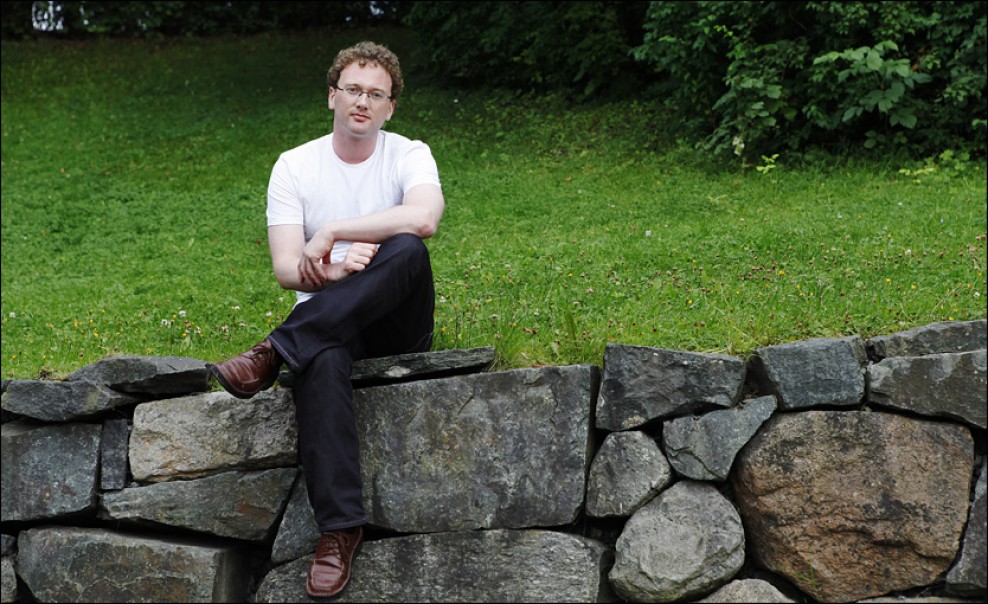
RATTLED: – I have warned my family about this interview, and I’m now going into hiding because of my personal safety, says Peder Jensen. Photo: NILS BJÅLAND, VG
Breivik’s political idol «Fjordman» emerges from anonymity
– I am Fjordman
(VG Nett) In an exclusive interview with VG, Peder Jensen (36) sheds his alias as the right wing blogger «Fjordman», and talks about his shock at being cited as an influence by terrorist Anders Behring Breivik.
Thursday he was questioned for several hours by Norwegian police about his supposed interaction with Breivik (32).
Under the alias «Fjordman», he has been a prolific blogger on different far-right websites, and was cited extensively in Breivik’s rambling manifesto.
The 36 year old man, originally from the coastal town of Ålesund, agreed to an interview in a café in Oslo Thursday evening.
In accordance with his lawyer, he has elected to be interviewed in VG using his real name, and asks that journalists do not contact his neighbors or family.
– I have warned my family about this interview, and because of my own safety, I’m now going into hiding, says Jensen.
Norwegian text:Her er drapsmannens forbilde «Fjordman»
Soft spoken and unassuming, he is dressed in a white t-shirt and dark jeans. He says he was horrified at being cited a total of 111 times in Breivik’s 1500 page manifesto.
– I have not read the manifesto, but I have seen bits and pieces referred in the media, and some parts have been shown to me by others, he says.
During the period between 2009 and 2010 he received a handful of emails from Breivik, where he told Jensen that he was working on a book. In one email written towards the end of 2009, he also asked if he could meet his political idol «Fjordman». Jensen refused.
– I don’t know why he wanted to meet me, but I declined. Not because of his extreme views, but because he didn’t seem very interesting – like a vacuum cleaner salesman. «Pie in the sky», I thought to myself when I re-read the emails, says Jensen, again stressing that he never met Breivik personally.
Police sources confirm that Jensen has been questioned as the blogger «Fjordman», and that they are certain of his identity.
– I feel it’s my duty to give a statement to the police, and I wanted to do this interview because my name eventually would have emerged anyway, resulting in a media frenzy. It is also a way for me to clear my name, says Jensen.
Norwegian police confiscated his computer Thursday, and even though he was questioned as a witness, he feels that the police are looking to implicate him.
– They won’t find anything on my computer regarding any criminal matters or Breivik, he says.
Jensen has a masters degree in culture and technology from the University of Oslo, and has studied Arabic at the University of Bergen and the American University in Cairo. In his master’s dissertation he wrote about censorship and blogging in Iran.
He has never been a member of any political party in Norway, and after completing his compulsory military service, he says he has never touched a gun.
After the terrorist attack and his blog being cited as an influence, Jensen says he will never use the alias «Fjordman» again.
– I don’t wish to be associated with Breivik and his horrible actions, he says.
New York Times adopts Islamic view of time and cause and effect
Muslims among their other bag of rhetorical tricks and devices, like to put effect before cause and then blame things they do on the things that happened after. Basically its the logic of the school yard bully who claims that ‘the fight started when he hit me back’.
One example would be the building of the Al Aqsa mosque in Jerusalem, then claiming its proof of Israel being an Islamic territory despite archeological and contemporary evidence of thousands of years of Jewish existence there before Mohamed was even born, and then fighting to return it to a state it never was. Sort of a living, continuous simulacrum.
Now the New York Times adopts the same logic. They blame, albeit indirectly, US conservative bloggers like Robert Spencer and Gates of Vienna for the Norway mass murder by a man who, in his own manifesto, demonstrates that he has been planning and training for this attack for nine years. This would be several years (it doesn’t matter how many. More than 1 second is enough) before any of the sites he uses as his excuse for the attack ever began writing.
What is clear, is that the man wished to kill a lot of people and in a spectacular way. It is clear that he wished great notoriety for doing so. It is clear he wished to have a grandiose reason for his horror which he made up as he went along, well after he decided to do this attack.
What a pity the times is complicit in this reasoning. But as this analysis points out, it is not inconsistent with its overall reporting of matters Islamic or concerning what it views as the ‘right wing’
Eeyore for Vlad
Fjordman, John Lennon and Che Guevara
I am getting rather fed up with commenters here and elsewhere, as well as articles that are appearing in the MSM and blogs accusing the historian and blogger known as ‘Fjordman’, a personal friend of mine and someone who’s thinking and character I admire very much, of being everything from a mentor to the Norwegian mass-murdering monster to actually being that Norwegian mass-murdering monster despite the fact that he is not in jail and continues to publish while the accused is at the moment, safely in jail.
A few things need to be pointed out right now which dramatically effect the complexion of this event and how Fjordman’s role is perceived in it.
For one thing, the killers manifesto shows he has been planning this event for over 9 years. This means that Anders had planned to do this atrocity or something very much like it for years before Fjordman or for that matter any of us in the counter jihad had even begin to write.
Secondly, I do not see anyone now or then accusing John Lennon of killing Sharon Tate. The Beatles wrote a rather angry sounding song called ‘Helter Skelter’ which the psychotic serial killer Charles Manson used as his inspiration to murder many people most notably Roman Polanski’s then pregnant wife Sharon Tate and write the name of the song in blood on the walls of their family home.
He wrote about how Helter Skelter was the Beatles way of letting us all know about the coming race war between blacks and whites in the USA.
No one then except for a few kooks accused the Beatles of having any real complicity in these crimes. They understood that people can take any influence they want and use it how they see fit for their purposes and this paints no guilt on the person who’s work was taken grossly out of context as the Beatles certainly never meant to inspire anything remotely like the actions in Oslo on July 22 of 2011 just as Fjordman never advised, wrote, said or for that matter thought that it might be a good idea to let bombs off all over Norway and kill a lot of indigenous Norwegian children or anyone for that matter.
However I can’t help but grimace at the thought that many who would condemn Fjordman for the fact that his writing has been twisted and abused by a monster who planned his awful deed years in advance of even reading Fjordman’s work, would likely wear Che T shirts, glorifying a mass murderer and Castro’s prison torturer, a man who used his medical skills to be a better administrator of human suffering and creator of maximum pain for Castro’s political opponents and often whole villages of people who just did not agree with his totalitarian vision.
Like so many stomach turning ironies of this day and age, we are reminded of how urgently necessary is our sense of smell.
Eeyore for Vladtepesblog
Leaps of logic.
There will be a lot to say in the coming days about the barbaric mass murder by Anders in Norway. I have quite a bit to say on it myself but I would like to wait till some more accusations and absurd connections and asignation of guilt are made. Meanwhile, Pamela Geller made a rather excellent post about those who would make leaps of logic to cast blame.
One thing is certain. If blogs like mine or Gates of Vienna or Fjordman etc. can be blamed for inspiring this monster — blogs that have never once advocated violence, that have been firmly against terrorism no matter who it was by, people like Geert Wilders that wish to preserve a culture of modern liberalism and pluralism against the mono-culturalist Islam and its totalitarian illiberal legal ‘system’ — if all these people are to blame, then how can those same people say that the Koran, which is nearly one long solid incitement to terror and murder, rape and taking of slaves, of manifest destiny and mass slaughter and theft of all things belonging to unbelievers, how can those same people who accuse we of the fledgling pro-classical-liberalism, pro-women’s rights and gay rights (to varying degrees, granted), how can they accuse us of being the inspiration to this one lone Norwegian mass murdering monster and yet absolve the Koran for its role in inspiring many of history’s greatest genocides, from the Nazi one (Muslim SS divisions in the Balkans) to the unimaginable genocide of Hindus, causing the Gypsy Diaspora, to Europe, and on, and on, and on.
Fjordman on the Oslo blast today:
“…And please keep in mind that the left-wing government of Jens Stoltenberg that was just bombed is the most dhimmi appeasing of all Western governments, to the extent that this is humanly possible. They even wanted to fund Hamas openly a while ago.”
“The most suicidal and cowardly government in a country with no colonical history was just attacked. How do you explain that as a response to Western “aggression”?
Fjordman
The Noted Blogger Fjordman Discusses the English Defence League
From the EDL Website:
 By Fjordman
Critical comments have been published about the alleged extremism of the English Defence League (EDL), the anti-Jihadist street protest movement that is active in many English cities.
The origins of the EDL can be traced back to Luton, England in the spring of 2009, after British troops were harassed by militant Muslims. Scandinavian blogger Conservative Swede commented in April 2009 that “The police broke up a march on Monday 13/4/09 by British people wanting to reclaim their streets from Muslim fanatics. Officers said it was illegal to stage the protest in Luton where extremists were allowed only last month to shout abuse at troops home from Iraq. This is the first time I can remember seeing Westerners act morally. All morality is ultimately rooted in moral outrage. Without socially manifested moral outrage there can only be nihilism. All the priestly preachers of the all-encompassing Enlightenment tsunami, and their priestly institutions, have during the last centuries, and especially during the last decades, worked eagerly to deprive the Westerners of all sense of morality, all sense of honour, and left us with nothing but their cynical, destructive and cruel nihilism; which is in the process of killing us as a civilization. It’s good to see the goodness and honour of these young men. It shows the natural sense of morality that after all exists under the surface among the Westerners. Something we haven’t seen since the days of Enoch Powell. Something that has been utterly suppressed by the traitorous pharisees in our ruling classes.”
It is interesting to notice that persons who work for the other team can often see things more clearly than many of us do. Jon Cruddas, a Labour Party MP, wrote in an essay in the left-wing, pro-Islamic newspaper The Guardian that “What makes the EDL much more dangerous is how it reflects a wider political and cultural war. Across western Europe rightwing populist parties are achieving huge electoral success on the same anti-Islam platform.”
Yes. This happens because ordinary people now sense that we are being lied to. We are fed-up with seeing our so-called leaders appease organizations that have declared war against our societies, while our sons and daughters are being harassed in the streets by immigrant gangs.
Fjordman: Women, and Human Accomplishment
The book Human Accomplishment does not contain many female names. Has the author Charles Murray unfairly discriminated against women? I see little evidence of this. When reading the index for Western music I notice the absence of Hildegard von Bingen from the twelfth century, a German abbess and composer. She should perhaps have been included. Yet I also did not find the English composer and conductor Benjamin Britten, who was at least as prominent as her.
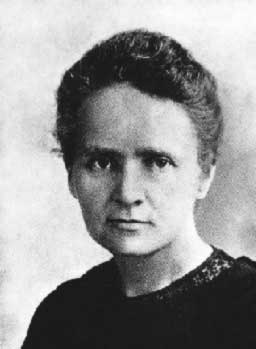
Marie Curie
Of women authors renowned for writing about issues relating to Feminism, the highest-ranking one in Western literature is Virginia Woolf, with an index-score of 12 out of 100. Mary Wollstonecraft who wrote A Vindication of the Rights of Woman (1792) is not listed, but her daughter Mary Shelley, remembered for the Gothic novel Frankenstein (1818), is.

Mary Shelley
Outside of Feminism and women’s issues, female contributions to the field of philosophy are quite tiny. Simone de Beauvoir receives a modest listing for The Second Sex (1949), but only in literature, not in Western philosophy. She receives a lower score there than the English sisters Charlotte and Emily Brontë and significantly lower than Sappho of Lesbos, Jane Austen or Mary Ann Evans, also known as George Eliot. Since the book ends in 1950 it does not mention Atlas Shrugged, a novel by Ayn Rand, first published in 1957 in the USA, The Feminine Mystique, published by Betty Friedan in 1963, or Silent Spring (1962) by the American conservationist Rachel Carson, which helped inspire the environmental movement. Continue Reading →
Fjordman: The Flaws of Edward Said’s Orientalism
From Jihad Watch:
2:01 PMFjordman:
The Flaws of Edward Said’s Orientalism2:01 PMSummed up, it is obvious that Mr. Said was a grossly dishonest writer with a poor grasp of history. His book is so deeply flawed both in its fundamental premise and in its execution as to be practically worthless as a serious historical work. What surprised me when reading it for a second time is not that it is distilled ideological propaganda; that I already knew. What struck me the most was that it’s not very good even if judged purely as a piece of propaganda.
I can think of a number of writers, for instance the Communist author Bertolt Brecht, who supported ideas that I disagree with or even actively dislike, but who I will grudgingly admit had some linguistic talent. I cannot honestly say that about Edward Said, though. Not only was he a poor thinker; he was also a pretty poor writer. He does not know how to hide his ideological shortcomings or seduce his audience with clever anecdotes, witty remarks, linguistic elegance, personal charm or a sense of humor. He possessed few of these qualities.
What I see when reading Orientalism is the unattractive self-pity of a privileged man claiming to be underprivileged, a man with many harsh words for the alleged evils of Western imperialism but hardly a single critical comment for the Arab and Muslim one, possibly the most brutal of all imperialisms if you believe V. S. Naipaul, which has already wiped out numerous nations and is currently very close to eradicating Said’s people, too. If somebody paid me a lot of money and I ignored any moral scruples, I am fairly confident that I could have written as better work of anti-Western propaganda myself, based on real events such as the Opium Wars or the transatlantic slave trade. The Middle East must really be thirsting for anti-Western propaganda if Edward Said’s Orientalism was the best they could come up with.
Fjordman: The in-depth evaluation of Charles Murray’s book Human Accomplishment continues.
Fjordman honours Vlad Tepes with the second in his essay series on the most interesting and (in my opinion) excellent book, ‘Human Accomplishment’ by Charles Murray, co-author of The Bell Curve’
By Fjordman. This is part II. Part I is here.
The in-depth evaluation of Charles Murray’s book Human Accomplishment continues.
In physics we find the English mathematician, astronomer, theologian and alchemist Isaac Newton (1643-1727) in first place, tied with Albert Einstein (1879-1955), born in Germany to a Jewish family, later becoming a Swiss as well as an American citizen. Behind them follow the prolific New Zealand-born British nuclear physicist Ernest Rutherford (1871-1937); the English naturalist Michael Faraday (1791-1867), a great pioneer in the fields of electromagnetism and electrochemistry; the brilliant Italian naturalist, mathematician and experimentalist Galileo Galilei (1564-1642); the gifted and highly eccentric English experimental and theoretical physicist Henry Cavendish (1731-1810); the quantum and nuclear physicist Niels Bohr (1885-1962) from Denmark, known for his contributions to atomic theory; the English physicist Joseph John “J. J.” Thomson (1856-1940) who discovered the electron, the first subatomic particle; the Scottish mathematical physicist James Clerk Maxwell (1831-1879), whose insights into electromagnetism and light were of fundamental importance for modern science and technology; the French physicist Pierre Curie (1859-1906), a pioneer in the study of crystallography, piezoelectricity and radioactivity.
After them comes Gustav Robert Kirchhoff of Germany (1824-1887), who developed spectroscopy for chemical analysis of the Sun and coined the term “blackbody” radiation, later used by fellow German physicist Max Planck; the Italian-born scientist Enrico Fermi (1901-1954), who made many contributions to nuclear and particle physics; the German scientist Werner Heisenberg (1901-1976), remembered for his work in the field of quantum mechanics and the formulation of his famous uncertainty principle in 1927; the Polish-born France-based physicist and chemist Marie Sklodowska Curie (1867-1934), known especially for her studies together with her husband Pierre of radioactivity, a term she coined; the English theoretical physicist Paul Dirac (1902-1984), who made great contributions to quantum mechanics and electrodynamics and predicted the existence of antimatter; the English scientific brewer James Prescott Joule (1818-1889), who studied the nature of heat and helped establish the conservation of energy principle and the First Law of Thermodynamics; the Dutch polymath Christiaan Huygens (1629-1695), who among many other things developed a wave theory of light; the English physician and natural philosopher William Gilbert (1544-1603), who introduced the term and concept “electricity” and whose work De Magnete described experimental studies of magnetism; the English physician and physicist Thomas Young (1773-1829), whose double-slit experiments conducted around the year 1800 converted many European naturalists to a wave theory of light; and finally the dynamic English natural philosopher and instrument maker Robert Hooke (1635-1703).
Newton’s and Einstein’s top position in this category should surprise nobody. Galileo’s ranking, based exclusively on his status as a founder of modern physics, not his contributions to astronomy, is uncontroversial. Rutherford discovered two types of radioactivity, described the nucleus of the atom and helped to develop our understanding of the subatomic world, bombarded atomic nuclei to change their composition and made many other valuable contributions. Faraday’s work on induction and on electricity and magnetism in general was of fundamental importance to the development of electrical generators and engines.
Other prominent physicists are Max Planck, Wolfgang Pauli, Hans Christian Ørsted, Antoine Henri Becquerel, Ludwig Boltzmann, Heinrich Hertz, John William Strutt (Lord Rayleigh), Evangelista Torricelli, Carl David Anderson , Hans Geiger, René Descartes, Otto von Guericke, Guillaume Amontons, George Gabriel Stokes, Archimedes, Amedeo Avogadro, Jacques Charles, Democritus, Hendrik Lorentz, George FitzGerald, Heike Kamerlingh Onnes, Ernst Mach, Thales of Miletus, Johannes Diderik van der Waals and Charles T. Wilson.
Some lesser, but still significant names are Victor Hess, Jean le Rond d’Alembert, Loránd Eötvös, Pyotr Kapitsa, Leonardo da Vinci, Pierre Prévost, Daniel Gabriel Fahrenheit, Joseph Sauveur, Charles Cagniard de la Tour, Carl von Linde, Louis Paul Cailletet and Raoul Pictet.
Among those who studied electricity in addition to Faraday, Cavendish, Gilbert and Ørsted we find François Arago, André-Marie Ampère, Charles-Augustin de Coulomb, Charles du Fay, Benjamin Franklin, Stephen Gray, Francis Hauksbee, Joseph Henry, Ewald Georg von Kleist, Pieter van Musschenbroek, Jean-Antoine Nollet, Georg Ohm, William Sturgeon, Alessandro Volta, Wilhelm Weber, Charles Wheatstone, Jean Peltier and Thomas Johann Seebeck. It is in my opinion wrong not to mention the German naturalist Franz Aepinus, who published the first mathematical theory of electric and magnetic phenomena in 1759. He was at least as important in this field as was his Swedish-born student Johan Wilcke, who is listed.
Another group of people besides James Joule and Ludwig Boltzmann were associated with the emergence of what we now know as thermodynamics: Nicolas Carnot, Rudolf Clausius, Josiah Willard Gibbs, Hermann von Helmholtz, Julius Robert von Mayer, Leopoldo Nobili, Alexis Petit, Benjamin Thompson (Count Rumford) and William Thomson (Lord Kelvin).
Hippolyte Fizeau and Léon Foucault in France measured the speed of light with great accuracy in the mid-1800s, followed by Albert Michelson and Edward Morley in the USA. Many names in addition to Maxwell, Huygens and Young are related to studies of the properties of light in the widest possible sense: Ibn al-Haytham (Alhazen), Johann J. Balmer, Anders J. Ångström and Henry A. Rowland, Erasmus Bartholin, Jean-Baptiste Biot, David Brewster, Pavel Cherenkov, Ilya Frank and Igor Tamm, Christian Doppler, Joseph von Fraunhofer, Augustin-Jean Fresnel, Dennis Gabor, Francesco Grimaldi, Pyotr Lebedev, Étienne-Louis Malus, Chandrasekhara V. Raman, Willebrord Snell, Johannes Stark, Josef Stefan, Paul Villard, Wilhelm Wien and Pieter Zeeman. After their discovery in 1895 by Wilhelm Röntgen, X-rays were used for fundamental scientific research by Max von Laue, Henry Moseley, Charles Barkla, William H. Bragg and William L. Bragg, Arthur Compton and many others. William D. Coolidge in the USA invented an improved X-ray tube in 1913.
Many individuals mentioned in the index of Human Accomplishment are remembered for studies of the subatomic world, quantum physics and nuclear fission, among them Max Born, Walther Bothe, Louis de Broglie, James Chadwick, John Cockcroft, Ernest Walton, Clinton Davisson, Johann Geissler, Eugen Goldstein, Frédéric Joliot-Curie, Irène Joliot-Curie, Ernest Lawrence, Philipp Lenard, Fritz London, Heinz London, Ernest Marsden, Maria Goeppert-Mayer and Johannes Hans Daniel Jensen, Edwin McMillan, Vladimir Veksler, Lise Meitner, Otto Frisch, Robert Millikan, Erwin Schrödinger, Emilio G. Segrè, Arnold Sommerfeld, Fritz Strassmann, Leó Szilárd and Julius Robert Oppenheimer, George P. Thomson, Ida Noddack, Walter Zinn, Hideki Yukawa and Cecil Frank Powell (but not César Lattes).
Following Paul Dirac’s lead, Richard Feynman, Julian Schwinger and Sin-Itiro Tomonaga from Japan developed quantum electrodynamics and shared the Nobel Prize in Physics in 1965 for this. Why is Glenn T. Seaborg not ranked in either physics or chemistry for his involvement in the discovery of a number of transuranium elements, among them plutonium?
The Hungarian-born Jew Leó Szilárd was partly responsible for initiating the Manhattan Project through writing the Einstein-Szilard letter sent by the famous scientist Einstein to President Franklin D. Roosevelt in August 1939, urging the USA to study the use of nuclear fission for weapons before Nazi Germany could make such devices. Another Hungarian Jew who became a key person in the American nuclear program was Edward Teller. He was to play a central role in the development of thermonuclear weapons, or hydrogen bombs.
Continue Reading →
FJORDMAN: THE BIRTH OF CAPITALISM
The blogger Fjordman files this report with the Vlad Tepes blog. KGS
The Birth of Capitalism
The Ottomans used a centralized power structure to extract a large proportion of the resources of the empire to use for military aggression, but they were successfully rebuffed by European states. The problem with an overly centralized power structure with high tax rates is that over time it will lead to economic and technological stagnation. Successful innovation requires some degree of decentralization, which could be found in regions of Western Europe with many free cities, from northern Italy via the Netherlands and Flanders in the Low Countries to England and northern Germany. This is where we encounter the development of capitalism.
The Ancient Economy: Evidence and Models, edited by J.G. Manning and Ian Morris, is a collaborative effort of various scholars on the economies of Egypt, the Near East and Greco-Roman Antiquity. The ancient world was not “capitalist” in our sense of the word. Slavery lessened incentives to develop labor-saving technology. People lacked a tradition of carrying on a sustained effort to produce a technological solution to a felt need (they had no “research-and-development” labs) and often suffered from a certain prejudice against work of the hands.
In the Greco-Roman world, wealth should preferably come from the land. Commerce was considered barely socially acceptable whereas industry was widely looked down upon. Sustained growth per capita requires sustained technological improvement. Roman economic growth was very slow because technological progress was slow – not necessarily nonexistent, but slow. There are few indications of what we might call a capitalist concept of making calculated investments in better technology in order to improve future productivity.
Western wealth began to grow with urban growth and commerce in the twelfth century and accelerated during the Renaissance into the seventeenth and eighteenth centuries with the development of a relatively autonomous class of professional merchants. Friedrich von Hayek (1899-1992), an Austrian and later British economist and philosopher, identified a new individualism provided by Christianity and the philosophy of Classical Antiquity which was developed during the Renaissance. He explains this in his classic The Road to Serfdom:
FJORDMAN REPORT: WAS MEDIEVAL CHINA SUPERIOR TO EUROPE IN THE SCIENCES……?
Fjordman files the following report with the Tundra Tabloids.
Was Medieval China Superior to Europe in the Sciences?
It has often been stated that the Chinese during the Middle Ages were superior to Europeans in “science and technology.” A problem with this claim is that science and technology were traditionally completely separate disciplines. They only started merging after the Scientific Revolution, and then only in the Western world. East Asians did well in applied technology with a limited theoretical basis, yes, but they were not equally good in the physical sciences.

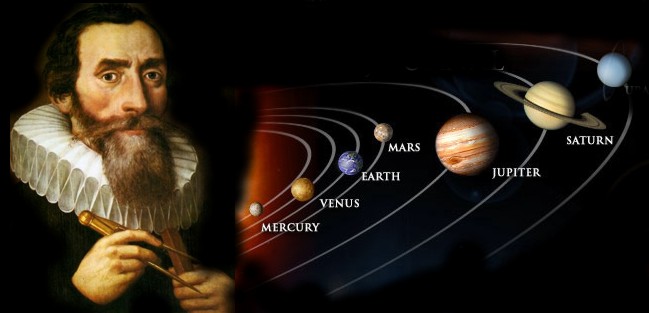
When the pro-Chinese English scholar Joseph Needham investigated the history of science among the Chinese he was eventually forced to conclude that “one can hardly speak of a developed science of physics” in China prior to modern contact with Europeans. It lacked the systematic thinkers that one encounters in the history of mechanics in medievalEurope, where there was an established tradition of arguing with Aristotle’s conceptions of motion. These include names such as Philoponus, Buridan, Bradwardine and Oresme, who all contributed to developments that culminated in Galileo’s work. In China there was no Galileo, nor Kepler’s laws of celestial motions, which formed the basis for Newton’s great synthesis.
The great Temple of Heavenwas constructed in fifteenth century Beijing. Symptomatically, the Earth was represented by a flat square and Heaven by a circle, which accurately reflects the fact that the Earth was widely held to be flat in Chinese cosmology well into modern times. By contrast, it was common in medieval Europe to see a cross-bearing orb on royal regalia, symbolizing Christ’s dominion over the world. One striking aspect of this is that the Earth was here represented as a spherical object. This was for instance the case with the Orb, Scepter and Crown insignia of the Holy Roman Empire, possibly dating back to the tenth century AD.
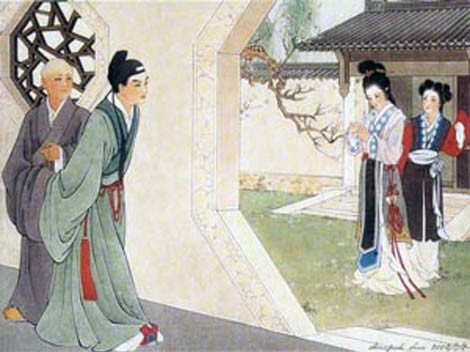 At this time, Europe was barely recovering from the collapse of urban civilization, while China, with the world’s largest and most sophisticated economy, went from the Tang to the Song Dynasty and was in the middle of one of the most technologically creative phases in its history. Another way of saying this is that Europeans had a more scientifically correct understanding of the shape and size of the Earth in a period when urban civilization barely existed there than the Chinese had while performing at their very best.
The consensus among Chinese scholars until around 1600 AD, more than two thousand years after Greek thinkers had demonstrated that the Earth is spherical, was that the Earth is flat. This basic error wasn’t corrected until they encountered modern European astronomers.