Ah the joys of multiculturalism. It means that the most monocultural people in this history of the world, Muslims, can demand that everyone submit to their totalitarian demands all over the world.
H/T Martin
“The secret of all victory lies in the organization of the non-obvious.” -Marcus Aurelius

Ah the joys of multiculturalism. It means that the most monocultural people in this history of the world, Muslims, can demand that everyone submit to their totalitarian demands all over the world.
H/T Martin
I have to confess, if we put their General Tsao up against our Colonel Sanders, I would bet on General Tsao for the win hands down.

China’s most powerful military leader, in an usual public statement, last week ordered military forces to prepare for combat, as Chinese warships deployed to waters near disputed islands and anti-Japan protests throughout the country turned violent.
Protests against the Japanese government’s purchase of three privately held islands in the Senkakus chain led to mass street protests, the burning of Japanese flags, and attacks on Japanese businesses and cars in several cities. …
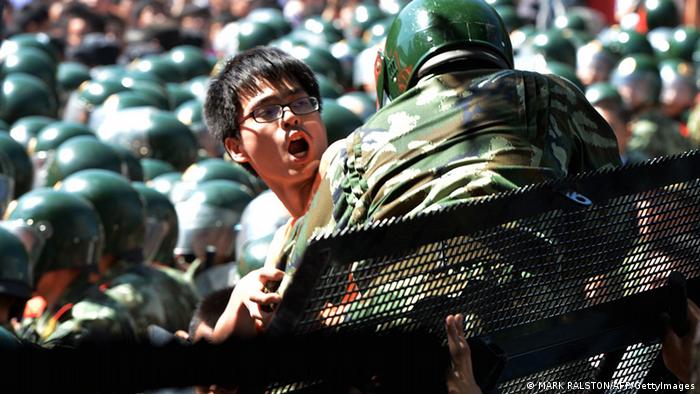
Anti-Japan protests have broken out across China, with thousands of people mobbing the Japanese embassy in Beijing. Tensions between the two countries have risen over a disputed chain of islands in the East China Sea.
Thousands of protesters hurled rocks and bottles at the Japanese embassy in Beijing on Saturday, as tensions between Asia’s two largest economies escalated over a row involving a disputed chain of uninhabited islands in the East China Sea.
I have no idea what to make of this at all. I don’t know if its for real or if Benny Hill came back from the dead and made this himself and the burka-psychos are not really his wives or daughters or both but are actually a tiny British bald sidekick. But I felt it was worth doing the best subtitling job I could and reposting it here as its certainly entertaining whatever else it is and it certainly would not be the most irritating, demanding or entitled thing Muslims did that day or even that minute.
Here is the link where I got it and a description of the event but again, I have no idea if that description is from what is known or what is surmised.
H/T Don L
I have retitled this video, ‘We Three Tards in Orient Are’
There has been quite a lot of increased hostility and tension in the far east between China, Japan, both Koreas with each other and with Japan etc. and seemingly over various islands and archipelagos.
While these growing conflicts involving ‘activists and flotillas of civilians’ as well as increased military presence and posturing may well be geopolitically significant, I just haven’t had time to research them all and post articles and links. But this one did raise an eyebrow.
A man attacked an official car carrying Japanese Ambassador Uichiro Niwa in Beijing and ripped the flag from the vehicle, Kyodo reported today.
Niwa was not hurt and Japan filed a protest with China’s Foreign Ministry, Kyodo said, citing officials at the Japanese Embassy whom it didn’t identify and an embassy statement. China expressed regret over the incident, Kyodo said, citing the embassy.
Not to be caught unawares again, the Japanese are running drills in case of an earthquake caused, rhinoceros rampage in Tokyo city streets.
IN THE wake of the nuclear crisis in Japan, Germany has temporarily shut down seven of its reactors and China, which is building more nuclear power plants than the rest of the world combined, has suspended approval for all new facilities. But this reaction may be more motivated by politics than by fear of a catastrophic death toll. It may be little consolation to those living around Fukushima, but nuclear power kills far fewer people than other energy sources, according to a review by the International Energy Agency (IAE).
“There is no question,” says Joseph Romm, an energy expert at the Center for American Progress in Washington DC. “Nothing is worse than fossil fuels for killing people.”
A 2002 review by the IAE put together existing studies to compare fatalities per unit of power produced for several leading energy sources. The agency examined the life cycle of each fuel from extraction to post-use and included deaths from accidents as well as long-term exposure to emissions or radiation. Nuclear came out best, and coal was the deadliest energy source.
The explanation lies in the large number of deaths caused by pollution. “It’s the whole life cycle that leads to a trail of injuries, illness and death,” says Paul Epstein, associate director of the Center for Health and the Global Environment at Harvard Medical School. Fine particles from coal power plants kill an estimated 13,200 people each year in the US alone, according to the Boston-based Clean Air Task Force (The Toll from Coal, 2010). Additional fatalities come from mining and transporting coal, and other forms of pollution associated with coal. In contrast, the International Atomic Energy Agency and the UN estimate that the death toll from cancer following the 1986 meltdown at Chernobyl will reach around 9000.
In fact, the numbers show that catastrophic events are not the leading cause of deaths associated with nuclear power. More than half of all deaths stem from uranium mining, says the IEA. But even when this is included, the overall toll remains significantly lower than for all other fuel sources.
So why do people fixate on nuclear power? “From coal we have a steady progression of deaths year after year that are invisible to us, things like heart attacks, whereas a large-scale nuclear release is a catastrophic event that we are rightly scared about,” says James Hammitt of the Harvard Center for Risk Analysis in Boston.
Yet again, popular perceptions are wrong. When, in 1975, about 30 dams in central China failed in short succession due to severe flooding, an estimated 230,000 people died. Include the toll from this single event, and fatalities from hydropower far exceed the number of deaths from all other energy sources.
Read more: Our interview with David Spiegelhalter, “Risk expert: Why radiation fears are often exaggerated”
(The interview linked to at the bottom is very good. Eeyore)
H/T to youtube user: Short and curlies
Meanwhile, in Albania, they are having a picnic
First, this article about the behaviour of the Japanese during a crisis that defies description in its horror and potential:
 Respect for property even in the middle of disaster (Photo: EPA)
The landscape of parts of Japan looks like the aftermath of World War Two; no industrialised country since then has suffered such a death toll. The one tiny, tiny consolation is the extent to which it shows how humanity can rally round in times of adversity, with heroic British rescue teams joining colleagues from the US and elsewhere to fly out.
And solidarity seems especially strong in Japan itself. Perhaps even more impressive than Japan’s technological power is its social strength, with supermarkets cutting prices and vending machine owners giving out free drinks as people work together to survive. Most noticeably of all, there has been no looting, and I’m not the only one curious about this.
This is quite unusual among human cultures, and it’s unlikely it would be the case in Britain. During the 2007 floods in the West Country abandoned cars were broken into and free packs of bottled water were stolen. There was looting in Chile after the earthquake last year – so much so that troops were sent in; in New Orleans, Hurricane Katrina saw looting on a shocking scale.
Why do some cultures react to disaster by reverting to everyone for himself, but others – especially the Japanese – display altruism even in adversity?
Then we have this. Remember this video?
And much more recently, we have this from Australia:
Curiouser and curiouser
This is video of the explosion at the Fukushima nuclear power plant. This has potential to be the worst artifact caused disaster of all time. STRATFOR is reporting an evacuation radius of 20 miles and that the Japanese government is advising against drinking tap water, eating vegetables or fresh foods
Here is a Press TV clip showing how Japanese police watch activities of Muslims closely. The Iranian Media mouthpiece is of course trying to show bigotry etc. I see sanity and it gives me hope, if you add this info-bit to the various wikileaks, that have come out recently about US admin views of Muslims and Islam in Europe, that our Western governments may not be as self destructive and PC-insane as it seems.
Thanks to our reader erisian23 we now know that “flower Swallow” means a child in North Korea who flits from opportunity to eat, one to the next like a bird.
Kotjebi or kotchebi (???) is a Korean term denoting North Korean homeless children. The term literally means “fluttering swallows”, given because of the kotjebi’s constant search for food and shelter.[1] The kotjebi are not officially recognized in North Korea, with any mention of the term being prohibited in state publications and documents
(from youtube comment)
Posted on Ana Nivtova on July 28, 2010
 A Japanese oil tanker was damanged in an explosion Wednesday as it was near the Strait of Hormuz. The explosion left one crew member injured.
According to statements from Japan’s Ministry of Transport, the explosion could have been an attack. The tanker was sailing towards Fujairah port in the United Arab Emirates to check the damage.
“In addition, a crew member saw light on the horizon just before the explosion, so (Mitsui O.S.K.) believes there is a possibility it was caused by an outside attack,” the ministry said in a statement.
The Importance of the Strait of Hormuz
Approximately 17 million barrels of oil pass via the Strait of Hormuz per day with Middle East crude oil accounting for 90 per cent of Japan’s total imports. The strait leads into the Persian Gulf past Oman and Iran, and is a transit point for approximately 40 per cent of the world’s oil tankers.