Expatica:
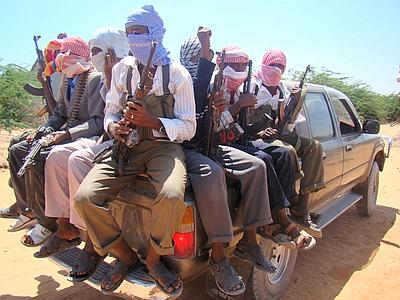
Fear of Islamist rebels grips this region close to the Somali border, a fear heightened by the abduction last week of two Spanish aid workers from a refugee camp.
Police officers, some on foot, others in Landcruisers, the only vehicles that can negotiate these tracks after heavy rain, fan out over all the trails that lead into Somalia as two helicopters hover overhead.
“We’re trying to find the two Spanish women who were kidnapped,” explained Philip Ndolo, deputy police chief of North East Province.
“We’ve patrolled in Dadaab, then in Kulan, in Damajaley; we’ve been to Liboi and to Hattar (on the Somali border), but we haven’t found them.”
In all of these towns, the police chief, accompanied by some 20 officers, has gathered the residents together to ask for information and and have received contradictory answers.
“We ask questions but we’ve no way of knowing who is telling the truth and who isn’t because the Shebab Islamists have the support of some Somali refugees and also of some Kenyans of Somali origin,” said one of his officers who said he has “exchanged fire with Shebab on several occasions” in the region.
This region of dense thorny scrub is inhabited mainly by Kenyans who are indigenous ethnic Somalis.
They have been joined by several generations of Somalis who, since the opening of the Dadaab refugee camps in 1991, have been fleeing war and famine in their country.
The vast majority of the inhabitants, their faces emaciated, say they have been forgotten by Nairobi.
“The Shebab have informers and accomplices everywhere,” a local administrator in Liboi told AFP.
The administrator, a traditional Somali wrap around his waist, explained that many residents “live in fear and dread of the Shebab.” Continue Reading →