Grads rockets injure 3 children in Israel

From reports I am reading, Iron Dome is taking out the occasional rocket. Of course, one has to wonder, if Israel develops a defense system that is even 100% effective, will that not make them less likely to strike back and teach those who attack her that there is a cost to that kind of aggression? I just have my doubts as to the wisdom of this kind of defense except were it relates to strategic certainty such as an incoming nuke etc.

From STRATFOR.COM


Israel, Palestinian Territories: Hamas Claims Rocket Fire

August 20, 2011

Hamas’ Izz ad-Din al-Qassam Brigades claimed responsibility for firing four Grad rockets at the Israeli town of Ofakim, injuring three children, Ynet reported Aug. 20.
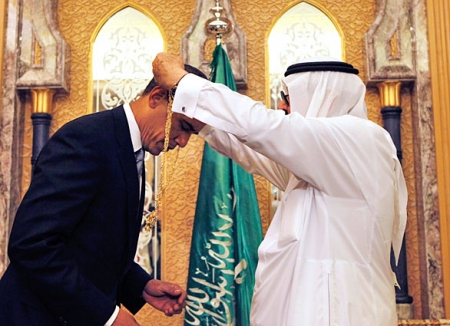
Obama administration pushing forward with India-style nuclear pact for Saudi Arabia

From Jewish World Review:

h/t Richard

  By Howard LaFranchi

JewishWorldReview.com |

mASHINGTON— (TCSM) The Obama administration is quietly moving ahead on the groundwork for a possible civilian nuclear trade agreement with Saudi Arabia — an agreement that could prove to be the most controversial of a string of such US deals in recent years.

The US plans to hold what State Department officials are calling “exploratory talks” in Riyadh this week to gauge Saudi objectives behind their interest in a civilian nuclear deal. The US also wants to explore whether the Saudi government would accept restrictions to ensure its nuclear fuel is used purely for civilian purposes, according to congressional sources.

The US has recently concluded civilian nuclear trade deals — or so-called “123” agreements — with India and the United Arab Emirates and is in advanced discussions with countries including Jordan, Vietnam, and South Korea.

But Saudi Arabia’s interest in such an accord has raised intense suspicions, particularly in the US Congress.

“There aren’t many countries you could come up with where people would be more energized in opposition to this kind of cooperation than this one,” says one House staffer who was informed on the administration’s planned talks, but could speak only on condition of anonymity, due to the fact that the talks have not yet been made public.

“It’s an unstable country in an unstable region, and — fairly or unfairly — people think 9/11 when they think of Saudi Arabia. It would be an extremely hard sell,” said the staffer.

The State Department first announced Saudi Arabia’s interest in gaining access to US nuclear technology for “medicine, industry, and power generation” in May 2008. US-Saudi relations have become considerably rockier since then, and some regional experts say it is important to keep that in mind when considering why the administration is proceeding with exploratory talks now.

Please click through for the rest     

Iran 3 months away from 1 bomb, possesses enough material for 3

Washington Times

By Reza Kahlili:

While America focuses on its internal problems and its involvement in three wars and the world focuses on the global economy, Iran is progressing on three dangerous fronts: nuclear weapons, armed missiles and naval capability.

Despite four sets of United Nations sanctions and pressure by the United States and Europe, Iran has chosen not only to continue its nuclear program but to expand it. Iran’s leaders, dominated by fanatical mullahs, announced in mid-July that the installment of faster centrifuges had begun and that they will soon triple the production of enriched uranium to 20 percent at the Fardo nuclear facility deep in the mountain near the city of Qom. It is estimated that Iran will have enough highly enriched uranium for one nuclear bomb within two months and currently has enough low-enriched uranium for three nuclear bombs.

(Please click through the link at the top for the rest)

MAD is mad. Mutually assured destruction no longer a good plan.

H/T Richard

Jewish World Review July 7, 2011 / 5 Tamuz, 5771

MAD in the 21st Century

By Clifford D. May

Why Mutually Assured Destruction makes no sense today

On June 28th, Iran’s rulers test-fired 14 ballistic missiles, including long- and medium-range Shahab missiles and short-range Zelzal missiles. Also, their new and improved centrifuges are turning out more enriched uranium for nuclear weapons.

In addition, departing Defense Secretary Robert Gates noted last month that North Korea’s nuclear weapons and missile development “now constitutes a direct threat to the United States. …They are developing a road-mobile ICBM (intercontinental ballistic missile). … It’s a huge problem.”

For national security experts, these developments raise a list of questions. For the rest of us, they should raise just two: Do Iran and North Korea represent threats we should take seriously? The answer, clearly, is yes. Are we building the missile defense system we need to protect America against these threats? The answer, just as clearly, is no.

To understand how this situation has come, recall a little history. During the Cold War, the U.S. adopted a strategic doctrine called MAD, for Mutually Assured Destruction. The logic behind it: So long as we were vulnerable to missile attack by the Soviets, and so long as the Soviets were vulnerable to missile attack by us, neither side would benefit by attacking first.

Veterans of the Cold War, still influential in the Obama administration, believe that if this kind of deterrence worked then, it can work now.

The current occupants of the Kremlin go further. They claim it is insulting for Americans and Europeans to attempt to protect themselves from the possibility of an Iranian or North Korean missile attack by building a missile defense system that one day may be robust enough also to thwart a Russian missile attack.

Continue Reading →

MEMRI: New underground Iranian missile silos

Firefox users may have to click here to see the video,

North Korea, Iran, ‘Super EMP weapon’

From Front Page Magazine:

h/t Richard

The United Kingdom is accusing Iran of testing nuclear-capable ballistic missiles in violation of U.N. Resolution 1929. At the same time, North Korea is moving full speed ahead with its weapons programs. It is well-known that the two collaborate on their WMD efforts, and it must be assumed that any progress will be shared. Recent advances by the two members of the Axis of Evil show that the West’s strategy against them is failing to stop their pursuit of the world’s deadliest weapons.

Iran launched its second satellite into orbit this month, which “demonstrated Iranian engineers’ growing skill and contrasted with the repeated failures endured by North Korea in trying to place payloads into orbit.” The New York Times said the rocket did not resemble an intercontinental ballistic missile, but the technology is still related enough to raise concern that the space program has a hidden purpose. Iran has also announced that it is installing new, more advanced centrifuges to triple its production of enriched uranium.

The Iranians have made “dramatic progress” in their ballistic missile programs in the past year, carrying out three tests of nuclear-capable missiles in defiance of the United Nations. The International Atomic Energy Agency has confirmed that it possesses evidence that Iran has worked on developing a miniaturized nuclear warhead. It has also tested advanced short-range missiles that have been called a “game-changer” because of the threat they pose to aircraft carriers. Reza Kahlili, a former member of the Iranian Revolutionary Guards, reports that two nuclear-capable warheads with a range of 2,000 miles are now in the hands of the Revolutionary Guards. He said eight more are to be delivered within the next nine months.

Kahlili’s report does not necessarily mean that Iran has manufactured the actual nuclear warhead. However, the South Korean defense minister says North Korea may have successfully made a miniaturized nuclear warhead. The director of the Defense Intelligence Agency likewise says that North Korea may have several plutonium-based warheads. To make matters worse, Larry Niksch of the Center for Strategic and International Studies says that North Korea could have ICBMs capable of reaching the U.S. in 2012. If North Korea has overcome the obstacles to warhead creation, then that means it is in a position to help Iran do the same for a price.

Dr. Peter Vincent Pry, president of EMPact America, says that Western analysts erred in describing North Korea’s last nuclear test in May 2009 as a failure. He says that the U.S. expected North Korea to detonate an implosion device with the power of 10 to 20 kilotons. The explosion was only three kilotons strong, giving the impression that the device was defective. In reality, Dr. Pry says, North Korea was likely testing a “super-EMP” weapon, referring to an Electro-Magnetic Pulse that destroys electronic components for potentially hundreds of miles.

There is more over at the source, FPM:


STRTFOR SITREP: Iran: Nuclear Warhead Capabilities In Short Time – Israeli Intelligence Chief

STRATFOR: July 5, 2011

Iran will have the capabilities to build a nuclear warhead within a short time, Israeli military intelligence chief Maj. Gen. Aviv Kochavi said July 5, Ynet reported. Kochavi said Iran is running 5,000 active centrifuges and is working to reach 8,000. Iran has accumulated uranium enriched to a level of 3.5 at a weight of 4,300 kg, he said. The Jerusalem Post reported that Kochavi said Iran has recovered from the last wave of sanctions even though the international consensus surprised it. The closer relations between Iran and Turkey have mostly focused on trade but military matters have also been discussed, Kochavi added.


Saudi prince raises prospect of nuclear arms race with Iran

From DW-WORLD:

Prince Turki al-Faisal, a former Saudi intelligence chief, has warned that if Iran obtained nuclear weapons, Saudi Arabia would too. Analysts say the two are already engaged in a ‘cold war’ in various parts of the world.

Britain’s Guardian newspaper revealed recently that Prince Turki al-Faisal gave an unpublicized speech earlier this month to senior officials at a NATO air base in the UK during which the former Saudi intelligence chief and ambassador to Washington and Britain implied that a nuclear arms race could break out in the Middle East if Iran continues to pursue its nuclear ambitions.

Faisal did not outline specific policies, but warned that if Iran had a nuclear weapon, it “would compel Saudi Arabia … to pursue policies which could lead to untold and possibly dramatic consequences.”

The newspaper also quoted an unnamed Saudi official as saying “we cannot live in a situation where Iran has nuclear weapons and we don’t.”

“If Iran develops a nuclear weapon, that will be unacceptable and we will have to follow suit,” the official said.

Yemeni anti-government protesters shout slogans during a demonstrationThe Saudis fear Iran’s influence in the Arab Spring

None of this is particularly surprising to Guido Steinberg, researcher at the German Institute for International and Security Affairs (SWP).

“He’s said something like this before, if I remember rightly,” he told Deutsche Welle. “Also, you have to be careful, because Faisal doesn’t hold any official position at the moment, though I think it’s clear that he would like to become foreign minister. Continue Reading →

N.Korea likely can miniaturize nuclear device: Seoul

ReutersBy Jack Kim | Reuters – 2 hours 6 minutes ago

SEOUL (Reuters) – North Korea has probably succeeded in miniaturizing a nuclear device, South Korea’s defense minister said on Monday, an advance that would in theory allow the hermit state to place an atomic warhead on a rocket.

Regional powers have for years tried — with a mix of aid offers and punitive sanctions — in vain to stop Pyongyang pressing ahead with a nuclear weapons program it argues is a necessary defense against a hostile United States and South Korea with which it still has no peace treaty to formally end the 1950-53 Korean War.

Kim Kwan-jin offered no evidence to back his assertion but said the North had had enough time for such a development.

“It has been quite a while, enough time for them to have succeeded in miniaturization,” he told a parliamentary defense committee.

If true, it would mark a key advance in the North’s drive to develop a functioning nuclear weapon though that threat appears to be potential rather than actual. Continue Reading →

Iran to Test First Nuclear Bomb by 2012?

From Pajamas Media

Written by Reza Khalili

According to sources in the Revolutionary Guards of Iran, Ayatollah Khamenei has ordered them to proceed immediately with the completion of the Iranian atomic bomb project, including testing and arming of missiles with nuclear payload.

Ayatollah Khamenei’s decision is based on a belief by the Islamic regime’s strategists that both America and Israel lack the courage and the ability to dismantle the Iranian nuclear facilities. The Iranian regime believes that America and Israel fear Iran’s retaliation, and that it has had them frozen in place and confused as to what action to take next. They have concluded that this presents a great opportunity for the Iranian regime to become a nuclear-armed state without any interference from the outside.

Khamenei offered the same message on June 1 at the Imam Hussein Military Academy:

The Great Satan, since the early days of the Revolution, has mobilized its military, financial, propaganda, and political empire to defeat the Islamic Revolution and the Iranian nation, but the political realities in Iran and the region show that the U.S. has been brought to its knees by the Islamic Revolution.

He further stated that the failure of the U.S. policies in the Middle East and the promising revival of Islam in the region are the realization of the divine promises to the Iranian nation — and that the recent events herald the realization of God’s promise that Islam and the Muslims will ultimately triumph.

The authorization for nuclear weapons by the supreme leader has been followed by the recent announcement by the head of the Atomic Energy Organization of Iran (AEOI), Fereidoon Abbasi, that Iran will start the installation of more advanced centrifuges at the previously secret site, the Fordo plant near the city of Qom. He also said that this will triple Iran’s production of 20 percent enriched uranium.

A chilling article titled “The Next Day after the Iranian Nuclear Bomb Test Will be a Normal Day” recently appeared on an Iranian website, Gerdab.ir, which is run by the Revolutionary Guards. This is the first time that an outlet belonging to the Iranian government openly talked about a nuclear bomb — Iran has insisted repeatedly that their nuclear program is for peaceful purposes.

The commentary states that after the Iranian nuclear bomb test, everyone will be able to go about their business as usual. The explosion will not be so strong as to bring destruction to the neighboring areas, though not so weak that the Iranian scientists have difficulties with their test. But it will be a day for Iranians to be filled with pride. The article even predicts playfully how Western media will cover the event.

Most chilling is how the article ends with a quote from the Quran (Al Enfal 60):

And prepare against them whatever you are able of power and of steeds of war by which you may terrify the enemy of Allah.

Please click here to read the rest of this article over at PJ Media


Khamanei orders an acceleration of the Nuclear Program

From a Time to Betray:

Al Qanat/ Cairo, Egypt / 06-02-2011

Washington, DC – Correspondent
Iranian dissident Reza Kahili, former member of the IRGC (Pasdraran), who received political asylum in the United States, presented an emergency report (to the Intelligence Committee in Congress), based on secret information forwarded from inside Iran, that the Supreme Leader of the Islamic Republic, Ali Khamanei has issued orders to the specialized authorities to accelerate the practical production of the Iranian nuclear program.
The corespondant of al Qanat in Washington learned via a short phone conversation with Kahili that the acceleration of the Iranian nuclear program necessitate the production of tactical nuclear warheads likely before the end of this summer. It was also known that the Guide Khamenei ordered is to buy all what needs to be bought at any price to execute the acceleration of the project.Al Qanat


According to reports from Iran, two missile warheads with nuclear capability have been delivered to the Iranian Revolutionary Guard Corps (IRGC).

Does Iran Now Have Nuclear Capable Warheads?

By Reza Kahlili

Published May 31, 2011

| FoxNews.com

According to reports from Iran, two missile warheads with nuclear capability have been delivered to the Iranian Revolutionary Guard Corps (IRGC).

Based on reports received by the Green Experts of Iran, the range of the missiles, produced by the Ministry of Defense Industries, has also been boosted and can now travel a distance of 2,000 miles. Simultaneously, a joint military-industrial project with Iran, Pakistan, China and the Ukraine has begun to produce nuclear warheads, including the first manufactured nuclear-capable warheads. These are now in the possession of the Revolutionary Guards.

The Ukrainians provided the design for the warheads, while the Chinese and Pakistanis delivered the technology, machining and tooling. The Iranian Ministry of Defense coordinated the interface with all three.

Recently, the U.S. warned the Pakistani government that further cooperation with the Iranian nuclear industries would result in various members of the Pakistani political and military ranks being added to the list of the internationally sanctioned. The U.S. has previously sanctioned several companies from China and the Ukraine for providing material aid to the weapons of mass destruction program in Iran. Also, reports from last October revealed that the Obama administration concluded that Chinese firms were helping Iran with the improvement of its missile technology and the development of nuclear weapons, and asked China to stop such activity.

Reports from the Iranian Green experts indicate that the technical and laboratory departments of the Amir Kabir and Shaheed Beheshti Universities in Iran also participated in this collaborative effort. According to the agreement between the Revolutionary Guards and the Ministry of Defense, eight more nuclear warheads will be produced and delivered to the IRGC within the next ten months. A number of the missiles have also been developed in cooperation between the defense industries and the Esfahan Industrial University.
Continue Reading →

U.S.: al Qaeda plotted against rail sector in 2010

WASHINGTON (Reuters) – Al Qaeda contemplated plots against the U.S. rail sector in February of last year, the Department of Homeland Security said on Thursday.

“We have no information of any imminent terrorist threat to the U.S. rail sector, but wanted to make our partners aware of the alleged plotting. It is unclear if any further planning has been conducted since February of last year,” department spokesman Matthew Chandler said.

The Department of Homeland Security and other U.S. agencies have been reviewing the information from Osama bin Laden’s compound in Pakistan seized during the raid this week that killed the al Qaeda leader.

Three U.S. law enforcement and national security officials told Reuters that the threat information cited in the Homeland Security Department bulletin was a year old.

The officials said there was no current intelligence indicating the existence of any specific threat to trains or any other target in the continental United States which had emerged since the raid.

(Reporting by James Vicini and Mark Hosenball; editing by Mohammad Zargham)

“Al Queda will unleash nuclear hellstorm if OBL is captured”

H/T Richard

Osama’s al-Qaeda ready for a fight ASIA TIMES:

By Syed Saleem Shahzad

ISLAMABAD – Command of al-Qaeda will be taken over by a select handful of leaders who had been chosen in advance of the death of Osama bin Laden, who was killed on Monday morning in a strike by Pakistani and American special forces on a compound in Abbottabad, about 65 kilometers north of the Pakistani capital Islamabad.
The death of the 54-year-old Bin Laden, who had a US$50 million reward on his head, is also likely to mark the beginning of a shift of the war theater from Afghanistan to Pakistan, al-Qaeda insiders tell Asia Times Online.
Asia Times Online contacts in the North Waziristan tribal area – a militant hotbed – confirmed that several meetings had already been convened in the town of Mir Ali to formulate strategies. They all confirmed an immediate and fierce retaliation against Pakistan and the breaking up of all ceasefire agreements with the Pakistan military.
The US had been on Bin Laden’s trail ever since he fled Afghanistan when American forces invaded the country in 2001 to oust the Taliban in retaliation for the September 11, 2001, attacks on New York and Washington; Bin Laden and al-Qaeda planned the attacks while guests of the Taliban.
“I can report to the American people and to the world, that the US has conducted an operation that killed Osama bin Laden,” President Barack Obama, also the US commander-in-chief, said from the White House. “After a firefight, they killed Osama bin Laden and took custody of his body,” Obama said. “The death of bin Laden marks the most significant achievement to date in our nation’s efforts to defeat al-Qaeda.”
It his believed one of his sons, two of his wives and many aides were killed in the raid, which included helicopter gunships.
Bin Laden’s death was confirmed by Pakistani intelligence. Lieutenant General Ahmad Shuja Pasha, the director general of Inter-Services Intelligence (ISI), said the ISI had been aware of the operation and was part of the whole process.
The US has put all its embassies on alert, warning Americans of al-Qaeda reprisal attacks. This corresponds with information obtained by Asia Times Online that Bin Laden’s death is likely to revive international terror operations against Western capitals that had been frozen following the great Arab 2011 revolt.
Late last month, Bin Laden warned that al-Qaeda would unleash a “nuclear hellstorm” if he were captured, according to classified diplomatic documents released by WikiLeaks.

For the rest please head over to ASIA TIMES: