
I can make a very good case that the CBC is far far worse, pumping countless cash into the retired geneticist’s faux-ndation to promote his various alternatives to efficient energy, David Suzuki.
Meanwhile, back to the bias of the BBC:
From The Daily Mail:
By David Rose
Last updated at 12:29 AM on 27th November 2011
Britain’s leading green activist research centre spent £15,000 on seminars for top BBC executives in an apparent bid to block climate change sceptics from the airwaves, a vast new cache of leaked ‘Climategate’ emails has revealed.
The emails – part of a trove of more than 5,200 messages that appear to have been stolen from computers at the University of East Anglia – shed light for the first time on an incestuous web of interlocking relationships between BBC journalists and the university’s scientists, which goes back more than a decade.
They show that University staff vetted BBC scripts, used their contacts at the Corporation to stop sceptics being interviewed and were consulted about how the broadcaster should alter its programme output.
 Taking advice: Alan Titchmarsh, whose scripts were vetted, filming at Ben Nevis in 2004
Like the first ‘Climategate’ leaks two years ago, they were placed last week on a Russian server by an anonymous source.
Again like their predecessors, they have emerged just before a United Nations climate summit, which is to start this week in Durban.
BBC insiders say the close links between the Corporation and the UEA’s two climate science departments, the Climatic Research Unit (CRU) and the Tyndall Centre for Climate Research, have had a significant impact on its coverage.
‘Following their lead has meant the whole thrust and tone of BBC reporting has been that the science is settled, and that there is no need for debate,’ one journalist said. ‘If you disagree, you’re branded a loony.’
In 2007, the BBC issued a formal editorial policy document, stating that ‘the weight of evidence no longer justifies equal space being given to the opponents of the consensus’ – the view that the world faces catastrophe because of man-made carbon dioxide emissions.
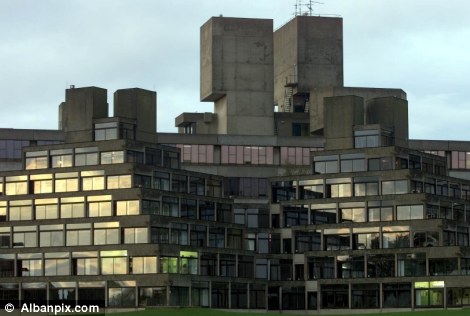
The University of East Anglia, where most of the emails originated – none of the newly released emails appear to be post 2009, but clarify the extent of government involvement in the scandal
The document says the policy was decided after ‘a high-level seminar with some of the best scientific experts’ – including those from UEA.
The ‘Climategate 2’ emails disclose that in private some of those same scientists have had doubts about aspects of the global warming case.
For example, Professor Phil Jones, the head of the CRU, admitted there was no evidence that the snows of Kilimanjaro were melting because of climate change, and he and his colleagues agreed there were serious problems with the famous ‘hockey stick’ graph – the depiction of global temperatures that suggests they were broadly level for 1,000 years until they started to rise with industrialisation.
But although there is now more scientific debate than ever about influences on climate other than CO2, prompted by the fact that the world has not warmed for 15 years, a report from the BBC Trust this year compared climate change sceptics to the conspiracy theorists who blame America for 9/11, and said Britain’s main sceptic think-tank, the Global Warming Policy Foundation, should be given no air time.
 Man in the middle: The BBC’s Roger Harrabin
The man at the centre of the BBC-UEA web is Roger Harrabin, the Corporation’s ‘environment analyst’, who reports for a range of programmes on radio and TV.
Last week The Mail on Sunday revealed that in 1996, he and his friend, Professor Joe Smith of the Open University, set up an informal two-man band to organise environment seminars for BBC executives. Continue Reading →

